

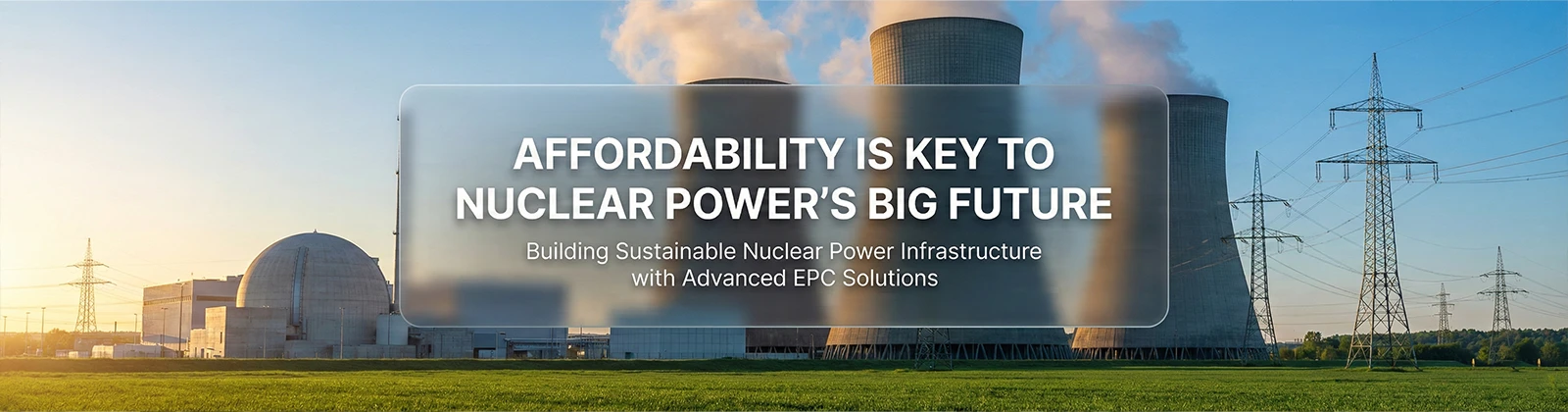
The world is grappling with the high demands on energy. With the change in climate and the urgent need to rely on clean energy, nuclear power is experiencing a significant resurgence, particularly in the largest Infrastructure Company in India. Nuclear power was once the least affordable energy source across the globe. However, today, the use of mixed energy resources, especially the improved technologies, and as affordability becomes a realistic priority, Nuclear power has become the central pillar in the global energy production.
Why Does Nuclear Power Matter?
Nuclear power addresses three critical priorities, which include increasing energy requirements, climate obligations, and the need for infrastructure development. The technology helps India to achieve its sustainable development goals while providing economic benefits through its long-term growth potential.
- Clean & Reliable Energy – Nuclear fission is a technique of producing very low-carbon electric power, helping in accomplishing qualified base-load requirements important for the existence of urban-industrial civilization.
- Affordable in the Long Run – Nuclear power requires significant initial investment, but it delivers nuclear energy at affordable pricing because its operating costs remain constant throughout time.
- Boosts Infrastructure Development – Nuclear power facilities need three types of construction work, which include EPC building operations, mechanical assembly work, and turnkey engineering and construction services. HLK Infra operates as one of India’s biggest infrastructure businesses, which executes advanced projects through safe and efficient operational methods.
- Advanced & Digital Construction – Modern nuclear facilities use Advanced technology facilities together with Digital EPC Services in India for project execution because these technologies help them improve safety standards and operational efficiency while controlling project expenses.
- Strengthens Energy Security – Nuclear power generates domestic electricity, which decreases fuel imports and makes electricity available for industrial use and infrastructure development to support national progress.
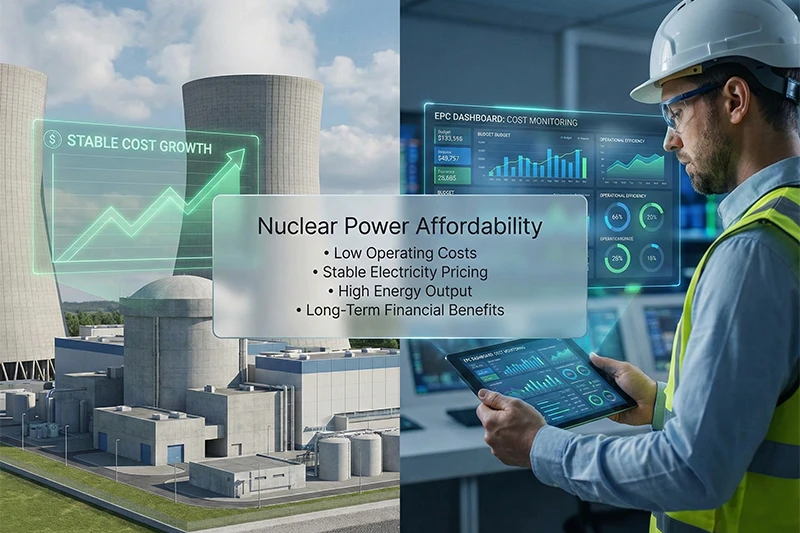
Nuclear Power Affordability
Governments persist in their support for nuclear power because they find nuclear energy to be an economically viable option. Nuclear power plants demand high initial investment costs, but they provide long-term financial advantages through their consistent and foreseeable power generation expenses.
- Low Operating Costs – Nuclear power plants need minimal expenditures for fuel and operational needs after they start functioning. The nuclear power industry maintains low-cost operations throughout its operational period, which usually lasts beyond 40 to 60 years.
- Stable Electricity Pricing – Nuclear energy maintains its pricing stability because it does not experience the same level of price fluctuations that affect fossil fuels. Nuclear energy power networks provide cost advantages to users while preventing abrupt increases in energy expenses.
- High Energy Output – Nuclear power plants produce extensive electricity from minimal fuel resources, which results in their operational efficiency and economic advantages.
- Infrastructure & EPC Efficiency – More precisely, an efficiently managed engineering effort plays a critical role in delivering within budget/ timely budget allocation for yields on a nuclear project. HLK Infra functions as one of the largest infrastructure companies in India, which enables the company to enhance its project execution efficiency through:
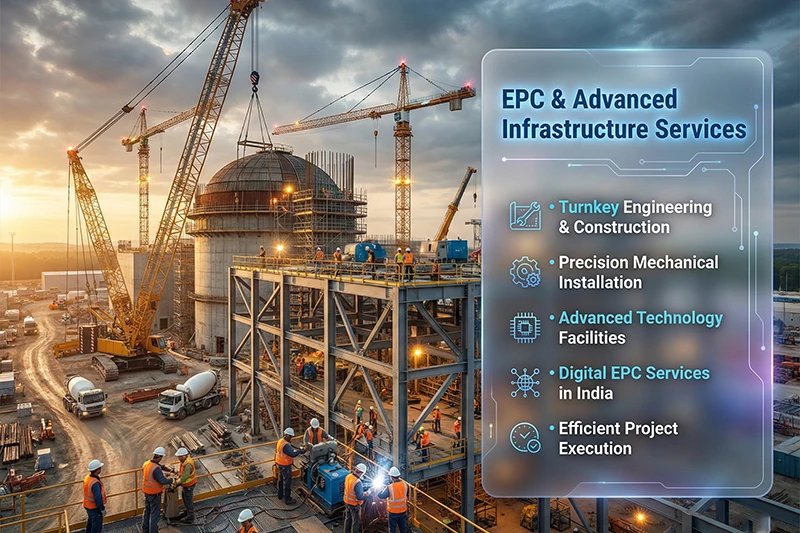
- EPC construction services in India
- End-to-end Turnkey Engineering and Construction Services
- Precision-driven mechanical installation services
- Advanced technology facilities in construction
- Integrated Digital EPC Services in India for real-time cost and project monitoring
HLK Infra helps build sustainable nuclear power facilities by merging its engineering expertise with digital technological developments.
The linchpin of the future of Nuclear energy lies in affordability:
Standardisation Reduces Costs
The construction expenses of EPC services in India provided by HLK Infra, one of the EPC Contractors in India, decrease while project durations shorten and supply chain performance improves when standardized reactor designs are reused for multiple projects. Small modular reactors (SMRs) deliver additional benefits that make nuclear power more affordable through their innovative technology.
Policy & Financial Support Matter
Government incentives, together with easier licensing procedures and financing options, create a situation where investors face reduced risks that lead to decreased project expenses. HLK Infra, one of the largest infrastructure companies in India, supports this through Turnkey Engineering and Construction Services, mechanical installation services, Advanced technology facilities in construction, and Digital EPC Services in India for efficient, cost-effective project delivery.
The Role of EPC and Advanced Infrastructure Services
Nuclear plant construction requires both technological solutions and effective project implementation methods to achieve viable, cost-effective results.
1.Turnkey Engineering and Construction Services
Turnkey solutions combine all design work with engineering tasks and procurement activities, plus construction efforts and equipment testing into a single package. The solution enables organisations to manage their project requirements through simpler operations, which result in decreased expenses because nuclear power plants have complex operational systems. The success of Epic projects depends on how precisely EPC construction services execute their work, how skilled their staff members are, and their ability to predict future events. The Indian energy sector depends on companies that succeed in this field to develop affordable nuclear power plant infrastructure.
2. Mechanical Installation and Project Execution
The company provides mechanical installation services, which include high-precision fit-up and piping, systems integration, and plant fabrication according to strict operational requirements. Mechanical work standards must meet excellence requirements because they determine safety and performance and long-term operational dependability for nuclear projects.
3. Advanced Technology Facilities and Digital EPC Services
Advanced technology facilities and smart construction and digital EPC tools, which include BIM and digital twins, provide three benefits that result in reduced expenses through improved planning and increased operational accuracy, and decreased material waste. Digital platforms enable companies and the EPC contractors in India to manage their project schedules and expenses while handling potential risks, which leads to improved construction methods for nuclear facilities and fewer costly project delays.
Conclusion
The energy future needs to become cleaner and safer through affordable power solutions. Nuclear power stands as the only solution that can fulfill this requirement. To reach this goal, advanced reactors need to be developed through effective policies, and infrastructure operators who implement energy power engineering need to provide their best results.
HLK Infra demonstrates how Indian infrastructure capabilities drive worldwide advancements through its complete range of engineering and construction services. Nuclear power will become a fundamental element of sustainable energy systems because its costs will decrease over time.