

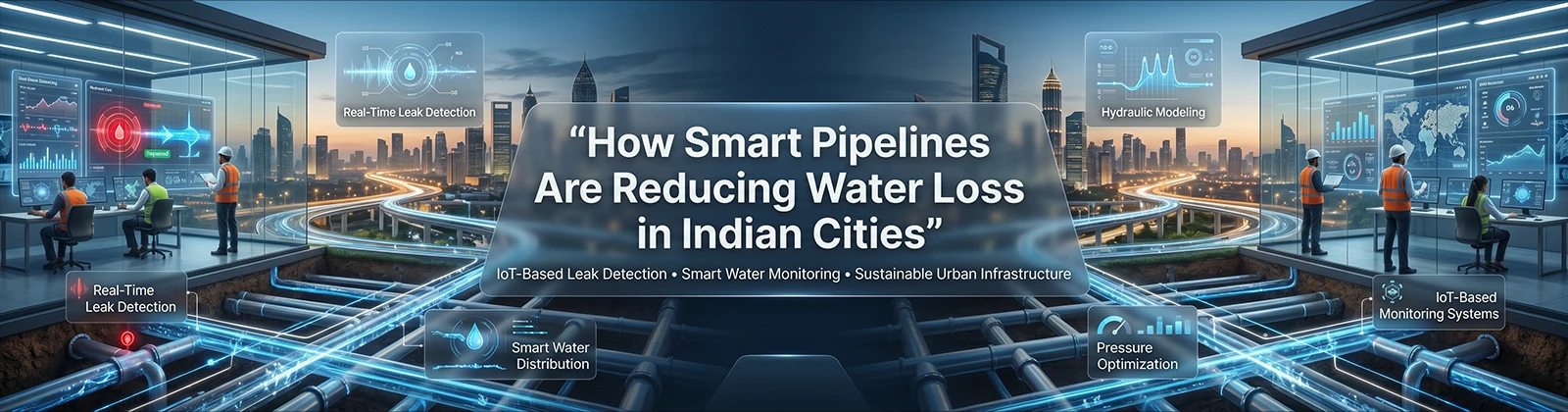
Indian cities that are experiencing rapid growth face an immediate water shortage crisis. The municipal water systems throughout the country face major challenges because of current population growth, their outdated infrastructure, and increased demand for water.
A substantial portion of processed water fails to reach homes because of system leaks, unauthorized connections, and the use of old water distribution systems. Indian cities use smart water pipeline systems to decrease water waste while improving their urban water management systems. Cities now use IoT sensors and hydraulic modeling along with AI-driven analytics and real-time monitoring to detect leaks, optimize pressure, and improve supply efficiency.
The Growing Challenge of Water Loss in Indian Cities
The Non-Revenue Water (NRW) system measures the water lost by Urban Indian cities through pipeline leaks, water theft, meter malfunctions, and operational inefficiencies. Recent industry reports show that several Indian cities have Non-Revenue Water rates or treated water loss that exceed 35% and reach up to 60%, thus showing higher levels of treated water loss than the established global standards.
The problem creates negative effects for both municipal governments and their respective residents. The utility company experiences revenue losses, while its operational expenses increase, and customers deal with unpredictable service interruptions.
Water loss occurs due to:
- Aging and damaged pipelines
- Undetected underground leaks
- Pressure fluctuations
- Illegal water connections
- Faulty metering systems
- Inefficient monitoring and maintenance
Conventional water supply systems depend on manual inspections, which lead to two problems: inspections take too much time, and operational costs increase. Urban areas need modern infrastructure systems that can handle their growing water consumption needs as their population continues to rise.
The Smart Water Pipeline System India concept started to gain traction. Modern urban populations require advanced systems that use intelligent technology and data connectivity to monitor water distribution in real time while detecting water losses.
What Is a Smart Water Pipeline System?
The smart water pipeline system in India uses advanced technologies to track water distribution throughout its urban distribution networks while handling water management operations and optimizing water flow. The systems merge:
- IoT-enabled sensors
- Smart meters
- SCADA systems
- Hydraulic modeling
- GIS mapping
- AI-based analytics
- Automated pressure management
With an aim to identify water loss early and improve distribution efficiency, various Indian initiatives have become a major part of modern urban infrastructure planning carried out in connection with India’s Smart Cities Mission.
The advanced pipeline system tracks real-time pressure, flow, and water quality information for its operational monitoring needs, while traditional systems depend on manual inspection methods. The system enables utilities to monitor their systems for unusual behavior, which indicates potential leaks or pipe failures.
Why Indian Cities Need Smart Pipelines Now
India’s cities will experience substantial population growth during the upcoming years, which will create extra challenges for current infrastructure systems that already face difficulties in managing water resources because of climate change effects.
Cities without modernization will experience:
- Severe water shortages
- Higher infrastructure costs
- Increased contamination risks
- Greater operational inefficiencies
Municipalities can enhance their water supply system reliability through smart pipeline initiatives in India, which do not require additional water resources. Water recovery from existing systems proves to be a cost-efficient solution compared to constructing new reservoirs and treatment facilities.
How Smart Pipelines Reduce Water Loss
Here are some of the ways smart water pipeline reduces water loss:
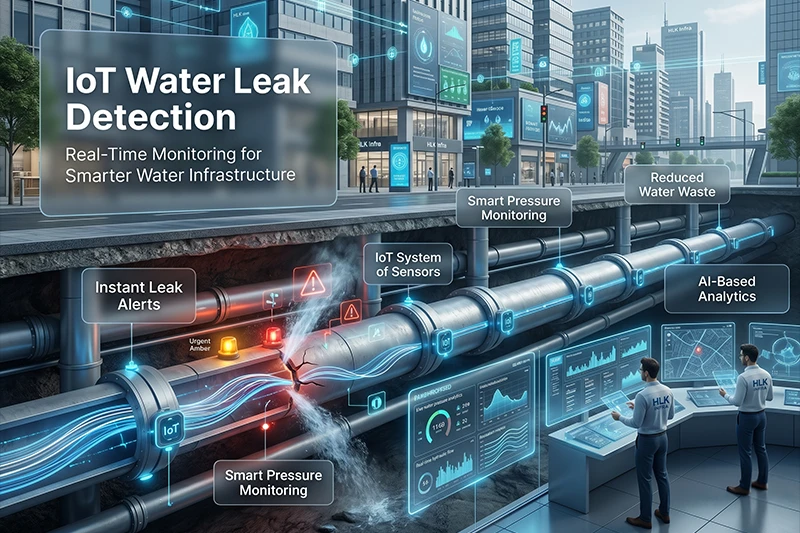
- Real-Time Leak Detection – The primary benefit of using IoT water leak detection systems in India is instant detection of leaks from water systems. Smart sensors are installed along pipelines to monitor changes in pressure and flow rates. This system enables the sensor machine to generate an alert to operators when it detects a sudden drop. This allows municipal teams to fix leaks before they become major failures. The process of traditional leak detection requires multiple days or weeks to complete. The combination of smart monitoring and traditional pipeline monitoring systems results in faster emergency responses while decreasing water waste.
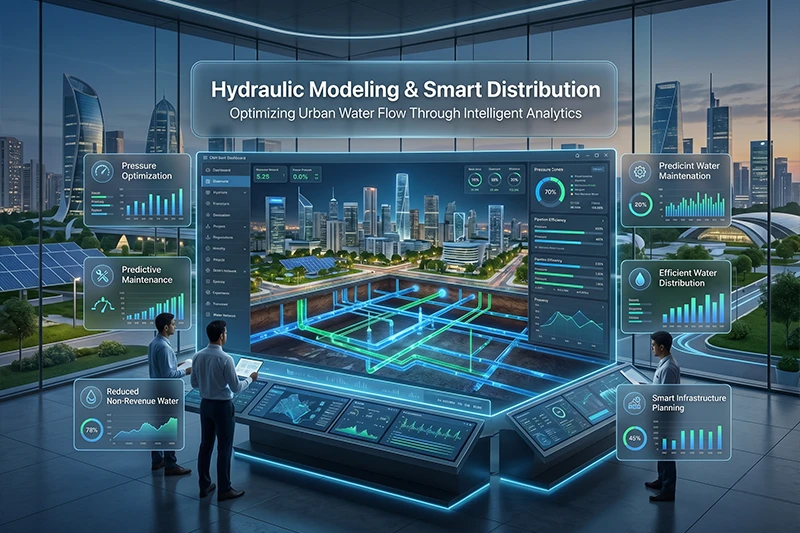
- Hydraulic Modeling for Better Water Distribution – Hydraulic modeling functions as an essential requirement for smart city water supply systems in India. The system develops a virtual model of the water distribution network, which displays how water flows through its piping system.
The models enable utilities to perform the following tasks:
- Identify high-loss zones
- Optimize pressure levels
- Predict future failures
- Plan maintenance schedules
- Improve overall network performance
Using hydraulic modeling, the system saves 10% to over 30% of water loss, reducing non-revenue water to achieve better efficiency through pressure optimization and leak detection. Some studies demonstrated that the targeted reductions reached more than 20% in specific pilot areas.
3. Pressure Management – The main reason pipelines experience damage and leakage problems stems from excessive water pressure.
The smart water pipeline systems of the city automatically control pressure distribution throughout their various operational zones. Furthermore, utilities achieve their operational goals through optimal pressure maintenance, which results in the following benefits:
- Prevent pipe bursts
- Extend infrastructure lifespan
- Reduce repair costs
- Improve water supply consistency
The pressure management system serves two functions by providing effective pressure control and distributing water resources equally among different urban areas.
4. Smart Metering and Consumption Tracking – Cities use smart meters to measure water usage, which helps them find instances of unusual water consumption.
The systems perform four main functions, which include:
- Detecting unauthorized connections
- Improving billing accuracy
- Promoting water conservation
- Reducing commercial water loss
Indian municipalities have started to implement smart metering projects, which include SCADA system integration for enhanced Urban water management in India.
The Role of IoT in Urban Water Management in India
Connected infrastructure systems drive the transformation of urban water management systems through IoT technology in Indian cities.
The water systems that use IoT technology rely on sensors to gather constant data from:
- Pipelines
- Reservoirs
- Treatment plants
- Pumping stations
- Distribution networks
The system uses AI and cloud platforms for data analysis, which helps to find operational problems and estimate when maintenance will be necessary.
The system provides the following advantages:
- Faster leak detection
- Lower maintenance costs
- Better water quality monitoring
- Reduced downtime
- Improved operational efficiency
Smart water systems enable local authorities to make informed decisions based on data rather than relying on manual inspections and reactive maintenance.
Smart City Water Supply India: A Digital Future
The Smart Cities Mission in India accelerates financial backing for advanced water management systems. The majority of cities now implement the following technologies:
- SCADA-based monitoring systems
- Automated valves
- Smart pressure zones
- Digital twins
- AI-based analytics
The technologies create an urban water supply system that delivers both improved resilience and sustainable operational performance. The cities of Bengaluru, Pune, Ahmedabad, and Hyderabad now use advanced water management technologies to reduce their water losses and improve their service delivery operations.
Digital transformation empowers organizations to achieve their sustainability goals through water resource preservation and energy consumption reduction in their pumping and treatment operations.
How HLK Infra Supports Smart Water Infrastructure
HLK Infra plays an important role in supporting modern infrastructure development and sustainable urban solutions in India. The growing requirements for better utility networks lead companies such as HLK Infra to develop advanced water pipeline systems, which enhance their operational efficiency while minimizing water loss.
The use of advanced engineering solutions enables cities to achieve sustainable water management through their complete pipeline infrastructure planning and development of smart urban utility systems.
Conclusion
The implementation of smart water pipeline systems creates new methods for Indian cities to manage their water distribution networks. The combination of IoT sensors with hydraulic modeling, smart meters, and AI-powered analytics enables municipalities to achieve Water loss reduction in Indian cities and increased supply reliability.
Urban population growth requires India to implement smart water pipeline projects, which serve as essential tools for reaching sustainable development goals. Intelligent water infrastructure investments in cities today will enable better future demand management and water resource protection.
Indian cities require more than just pipe repairs to achieve their goal of reducing water loss. Connected data-driven systems create urban water management systems that operate efficiently while preserving their ability to function during emergencies and their capacity to protect the environment.
Read More – Smart Water Management in India
Questions People Frequently Ask
A smart water pipeline system needs IoT sensors, AI analytics, hydraulic modeling, and automated controls to achieve effective monitoring and management of its water distribution networks.
The system uses IoT sensors that monitor pipeline pressure and flow data throughout the entire time. The system provides automatic detection of potential leaks because it recognizes unusual changes in the monitored data.
Water loss reduction in Indian cities is essential because it leads to multiple benefits for urban environments. Water loss creates higher operational expenses for cities while decreasing their available water resources and diminishing their capacity to operate urban systems. The reduction of water losses enables cities to save water resources while enhancing their service delivery performance.
Non-Revenue Water (NRW) represents all drinking water that municipalities lose between their treatment facilities and their actual customers because of pipeline leaks, water theft, inaccuracies in meter readings, and operational system problems.
The initial costs of smart water management systems are higher than traditional systems, but the advanced technologies of smart systems reduce operational expenses through improved leak detection, maintenance cost savings, and water loss prevention.