

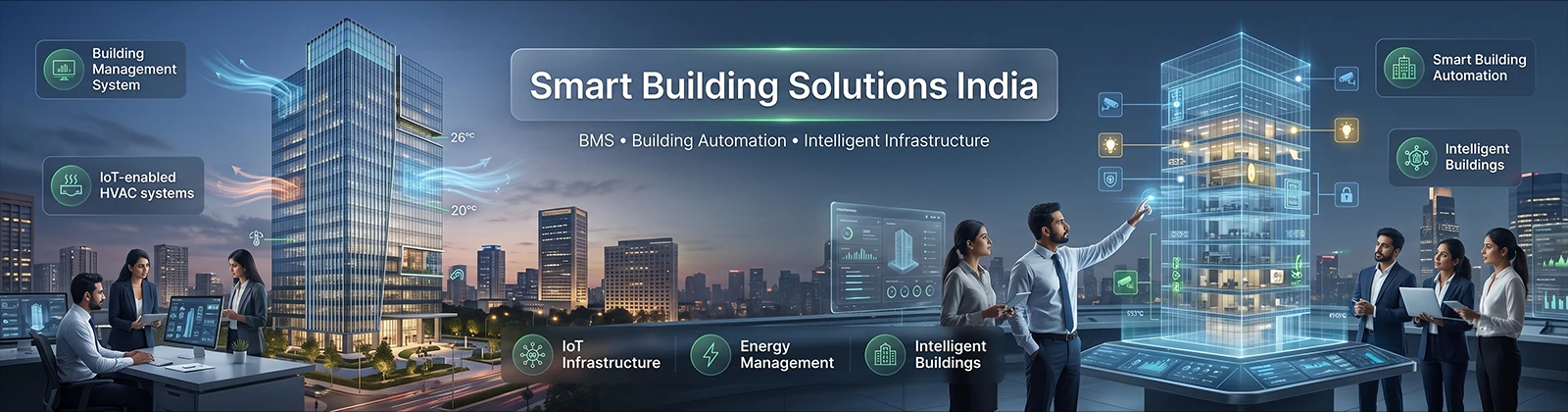
India’s smart city initiatives are accelerating urban growth and creating new high-performance, integrated ecosystems from older, traditional commercial real estate assets. The essence of increasing operational efficiency, reducing utility (energy) expenses, and improving comfort for everyone using a building is through SMART Infrastructure Technology (SIT). Commercial developers will need to utilize data-driven automation in their transition from traditional buildings to modern productivity centres in order to achieve these objectives.
The Development of Intelligent Infrastructure
The Indian real estate market is undergoing rapid change. Premium properties have very different definitions today than they did even a few years ago. Today, properties are valued based upon their level of operating intelligence as opposed to just the building or square footage of the property. Sustainable Development has positioned Smart Building Solutions India to provide the base foundation for all commercial and residential properties to be “smart”.
A smart property has an intelligent infrastructure that utilizes an adaptable network of architecture, including mechanical, electrical, and plumbing systems that can communicate and exchange data in real time. By allowing these systems to share information in real time, property owners can improve baseline operations, protect their properties from physical damage, and respond quickly to changes in the type of vacancy and the weather.
At HLK Infra, we continue to be at the cutting edge of this evolution by providing the newest, up-to-date, innovative, and high-tech infrastructures through a combination of traditional structural engineering with advanced digital technologies.
India's Smart Building Technology Drivers for 2026
The economic benefits, rigid environmental laws, and changing work conditions are all pushing toward intelligent building systems in India. The way that smart building technology India 2026 is being deployed today reflects the following main driving elements:
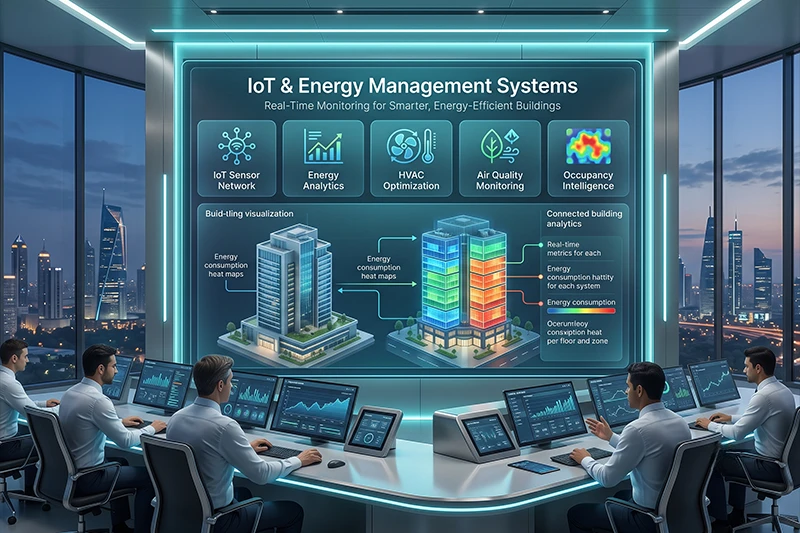
- Internet of Things Building Solutions Proliferation in India – The Internet of Things (IoT) serves as the sensory basis of contemporary buildings. The use of wireless IoT building solutions in India allows us to track the effects of varying environmental factors in real-time, such as Indoor Air Quality Index (AQI), Carbon Dioxide (CO₂), and Particulate Matter (PM2.5) levels. Detailed statistics on microzone room occupancy and layout usage.Detailed statistics on the instant pipeline pressure changes and where acoustic leak detection systems are located
- High-Precision Energy Management System for Buildings in India – The corporate push for net-zero emissions and the volatility of electric grid rates have created an urgent demand for high-precision energy management systems for buildings in India. A sophisticated energy management system for a building in India no longer provides basic monthly reports of energy usage; these cognitive analytics systems will track the demand for energy by individual circuits or HVAC chiller loops, so that when buildings eliminate wasted energy, they can see the benefit it has immediately.
- Move from Fixed Schedules to Dynamic Occupancy – Planning an office so that it meets its employees’ needs is a difficult task; however, planning an office so that it is adaptable to the continually changing work models of today is nearly impossible. Lighting and climate control systems are no longer on a fixed schedule; these systems can now automatically adjust to the amount of occupancy in the building.
The Role of a Modern Building Management System India
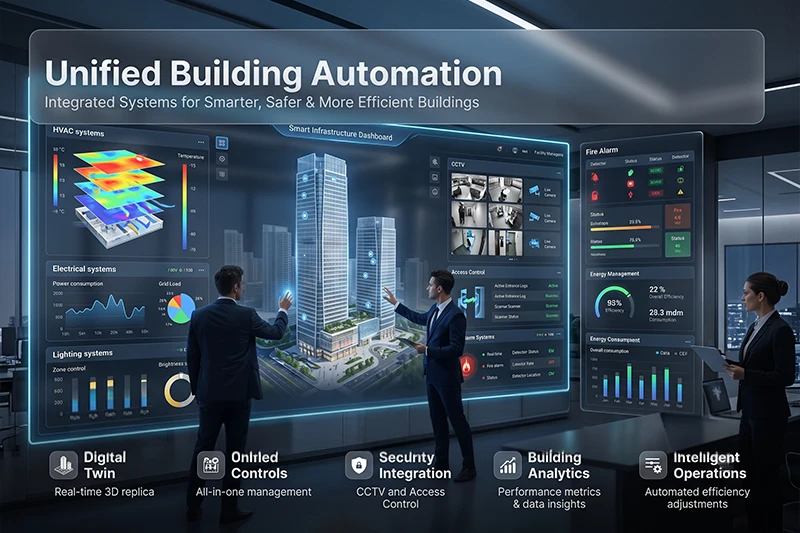
In any functional automated facility, there is always at least one fundamental component, the control network master. Furthermore, the BMS, as an integrated whole, acts as a central command that allows operators to control all of their major mechanical, electrical, and plumbing (MEP), automated, and manually controlled systems from a single dashboard.
As one of India’s premier BMS contractors, HLK Infra designs and commissions open-protocol building automation systems (BAS) such as BACnet, Modbus, and KNX. The use of open architecture guarantees there is no vendor lock-in and that multiple manufacturers’ field-level assets will operate seamlessly as a single system.
Modern building automation systems in India have the ability to enhance the efficiency and effectiveness of buildings in many different ways. Some examples include:
- HVAC Chiller Plant Optimization – Automation of variable frequency drives (VFDs) and modulation valves based on real-time ambient thermal changes is capable of reducing energy consumption from 10% to 30%, depending on the size and configuration of the facility’s HVAC system.
- Smart Lighting Automation – Utilizing daylight harvesting combined with addressable digital dimming technologies (DALI) can automate the dimming of peripheral fixtures when there is enough natural sunlight to light that area.
- Unified Emergency Mitigation – Coordinating fire alarms, smoke exhaust louvers, automatic access control gates, and CCTV systems into a single emergency response protocol, which provides for the fastest and safest possible evacuations.
Transforming the Workspace: The Rise of the Smart Office India
The commercial real estate industry is undergoing a massive transformational change as businesses pour investment dollars into developing what many consider to be a “smart office India.” These technology-enabled workplaces create a sustainable use of resources while providing a workplace environment that will improve employee performance, health, and retention.
The HLK Infra enterprise modernization project will feature a variety of upgrades, such as hot-desk scheduling systems that tie into localized climate control, automated meeting room release devices, and contactless access control systems. Each of these items can provide a substantial return on investment by improving space utilization and reducing daily operational expenses.
Conclusion
Integrated automation has changed real estate in India through the evolution of Smart Building Solutions India. Unified Building Management Systems for India and new IoT Building Solutions for India allowed modern facilities to operate efficiently and reduce energy waste. Partnering with specialized Building Management System (BMS) contractors in India, such as HLK Infra, will help ensure that your facility’s infrastructure is resilient, highly sustainable, and ready for the future, through 2026 and beyond.
Questions People Frequently Ask
A regular BMS uses manual supervision from one central location and operates according to preset schedules to control mechanical equipment; whereas a smart building automation system in India, built on cloud computing, utilizes IoT sensors, telemetry devices, and predictive algorithms to optimize facilities on an ongoing basis by automatically responding to changing occupancy levels, weather conditions, and other factors.
Utilizing a fully integrated energy management system with smart HVAC and lighting controls generally provides energy savings of 15% to 35% off total energy usage, which helps reduce overall carbon footprint and daily operating expenses.
Yes. Current intelligent IoT building solutions in India often use wireless networks such as LoRaWAN, ZigBee, or Wi-Fi, in combination with open-architecture data gateways, enabling the conversion of existing properties to become intelligent without having to perform expensive, disruptive rewiring.
An open protocol (such as BACnet or Modbus) helps to ensure that devices made by different manufacturers can work together, allowing you to avoid depending on just one vendor for years to come and to make it easier to add new hardware and expand your system later.