

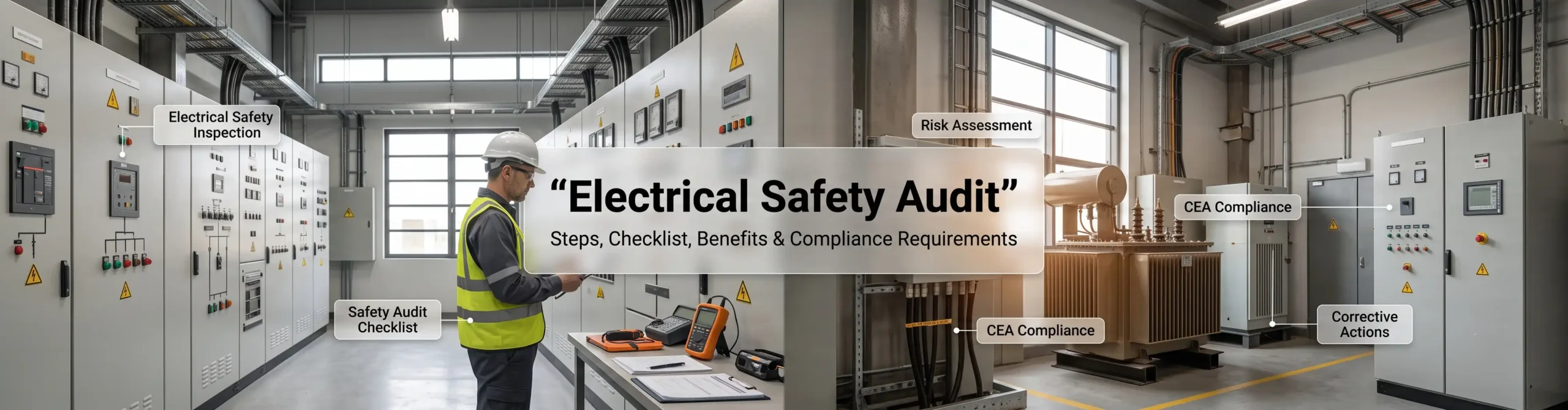
Electrical energy drives virtually all modern workplaces, commercial establishments, industrial facilities, residential units and infrastructure projects. However, if electrical installations are not properly maintained, overloaded and improperly installed, they may pose hazards including but not limited to electric shock, property damage, fire outbreak and down time.
Here, an Electrical safety audit becomes essential. It involves an analysis of an electrical installation in order to determine any hazards, safety concerns, maintenance defects, and possible cases of non-compliance.
Through the electrical audit services offered by an expert firm like HLK Infra, companies can be better placed to assess their electrical installations and address any emerging problem before it gets worse.
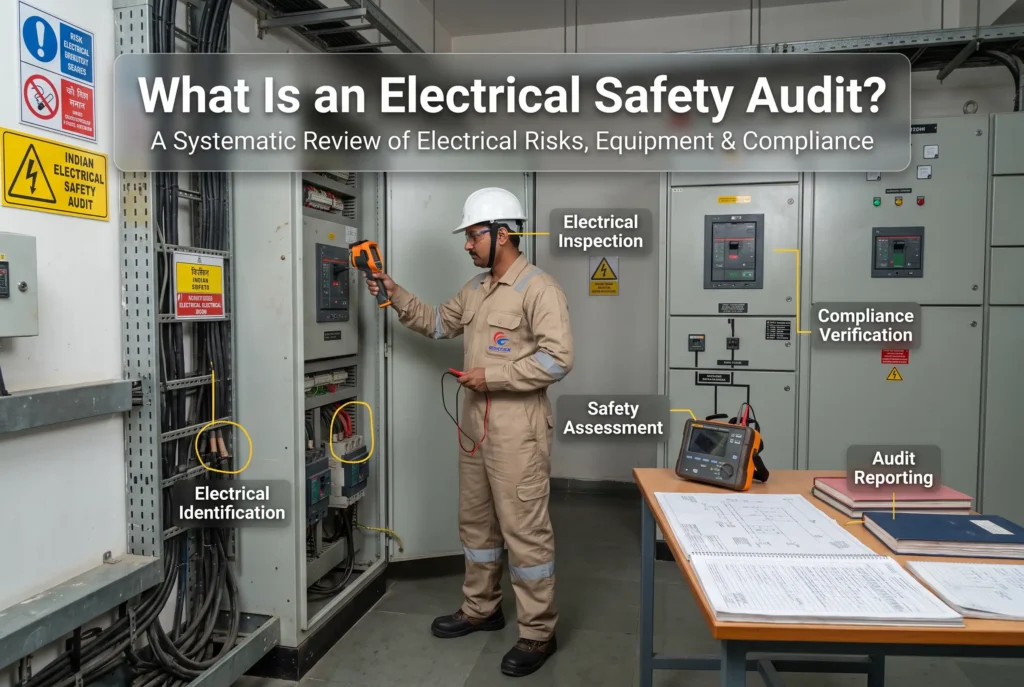
What is an Electrical Safety Audit?
An electrical safety audit is a methodical evaluation process carried out on an electrical installation to discover the risks involved, assess safety measures, and determine compliance with relevant Indian legislation.
In India, the regulations governing electrical safety include the Electricity Act, 2003, and the Central Electricity Authority (Measures relating to Safety and Electric Supply) Regulations, 2023, in addition to any relevant modifications including the 2026 Amendment Regulations, currently listed by the CEA.
Electrical safety audit aids in identifying any lapses, making a record of non-conformances, and suggesting actions that need to be taken. It is complemented by the statutory inspections conducted by the relevant Chief Electrical Inspectorate.
Why is Electrical Audit Important?
An electrical safety audit is very important for the identification of hazards, prevention of electrical accidents, and maintenance of compliance with Indian safety standards.
Professional electrical safety audit services include a comprehensive electrical safety inspection of wiring, earthing, protection systems, equipment, and electrical installations. An electrical audit checklist assists organizations in conducting a comprehensive audit and electrical safety assessment while identifying possible risks and problems.
Electrical compliance audit also assists in the proper documentation of systems, maintenance planning, risk reduction, along with compliance with the CEA requirements, while complementing inspections conducted by the competent electrical inspectorate.
What Does an Electrical Safety Audit Cover?
An electrical safety audit involves a comprehensive inspection of the electrical installation for any safety risks, shortcomings, and possibilities of non-compliance. The range will vary based on the nature and voltage of the electrical installation along with Indian guidelines.
Generally, the audit focuses on electrical panels, wiring and cables, earthing and bonding, protective devices, transformers, generators, motors, electrical distribution systems, and electrical installations. Sometimes it may include assessment of the insulation condition, load distribution, protective setting, emergency provisions, labeling, and maintenance.
At HLK Infra, along with that, the audit also considers various electrical records, testing reports, maintenance reports, and safety procedures. Based on the results of the audit, recommendations are provided for improving electrical safety and compliance with CEA regulations and state electrical safety requirements.
Electrical Safety Audit Process: Step-by-Step
A thorough process for performing electrical safety audits will make sure that none of the crucial steps are omitted. HLK Infra may design its audit process through the following steps:
Step 1: Initial Inspection – The first step of the audit involves getting familiar with the facility, electrical load, equipment, available documentation, past maintenance record, and inspection report.
Step 2: Visual Inspection – As part of the electrical safety inspection process, experts perform visual inspection of available electrical equipment looking for visible damage, loose parts, overheating, exposure of conductors and other defects.
Step 3: Testing and Measurements – In the cases where testing is appropriate and safe, relevant parameters are tested and measured, using suitable instruments and procedures.
Step 4: Risk Identification – Risks are identified by documenting any problems found during the process and assessing them depending on their nature and potential impact.
Step 5: Compliance Verification – Facility installation and available documentation are verified against relevant regulations and organizational safety procedures.
Step 6: Reporting – Findings and results are summarized and compiled in the form of an audit report, highlighting observations, risks, and recommended corrective actions.
Step 7: Corrective Action – Final stage involves repair or maintenance measures taken to improve and verify that significant issues are addressed.
Electrical Safety Audit Checklist
A comprehensive audit checklist allows auditors to thoroughly examine the essential elements of the electrical installation.
Audit Area | What to Check |
Electrical Panels | Panel condition, labeling, accessibility, connections and signs of overheating |
Distribution Boards | Physical condition, circuit identification, protection and housekeeping |
Wiring & Cables | Insulation, damage, routing, joints and cable loading |
Earthing | Earthing connections, continuity and condition of grounding arrangements |
Circuit Protection | Circuit breakers, fuses, RCD/RCCB/RCBOs and protective coordination |
Emergency Systems | Emergency lighting, shutdown arrangements and relevant electrical safety provisions |
Fire Safety | Electrical fire risks, clearances and coordination with fire-safety systems |
Documentation | Drawings, test records, maintenance reports and inspection history |
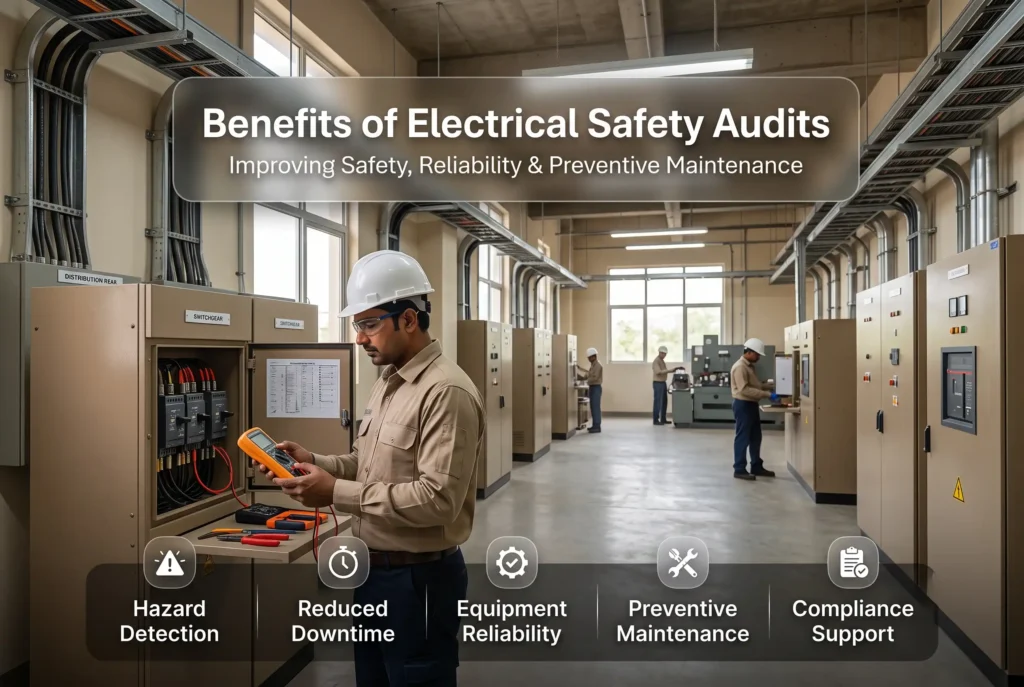
Benefits of Professional Electrical Safety Audit Services
Professional electrical safety audits offer organizations a structured way of assessing the risks associated with electricity. HLK Infra can assist clients in using the information obtained from the inspections in maintaining and improving their electrical systems.
- Identification of electrical hazards including faulty wiring, overloading, poor earthing, and malfunctioning equipment.
- Decreases chances of electrical shocks, fire outbreaks, short circuits, damages caused by malfunctioning equipment, and any other related accidents.
- Aids in complying with requirements set forth by the Electricity Act, CEA safety regulations, and any other relevant state requirements.
- Aids in identifying likely equipment malfunctions before they become costly and lead to equipment breakdowns.
- Assessment of earthing, circuit protection, electrical panels, wiring, and other important safety systems.
- Preparation of detailed findings and practical suggestions for improvement.
- Improves the reliability of the electrical systems and minimizes chances of unexpected system breakdowns.
- Assists in preventive maintenance by identifying areas that need maintenance work.
Why Choose HLK Professional Electrical Services for Safety Audits?
An electrical safety audit is more than just ticking off a few boxes in the checklist, and hence it is very important to select the right team, HLK Infra, for conducting such audits.
- Skilled individuals with knowledge about the assessment and audit procedures of electrical safety.
- Systematic checking of electrical wiring, earthing, electrical panels, safety devices, and other equipment.
- Identification and documentation of electrical dangers and safety inadequacies.
- The audit method must be compliant with the Indian electrical safety rules and regulations.
- Practical and useful recommendations regarding how to prevent risks and increase electrical safety.
- Detailed audit reports facilitating decision-making, maintenance, and documentation processes.
- Prevention of electrical accidents, breakdowns, fire threats, and interruptions.
- Professional and structured electrical safety audit services adapted to the specifics of every installation.
Conclusion
Electrical safety audits ensure that businesses keep their electrical systems safe and comply with regulations. By performing a proper electrical safety inspection and using an audit checklist, hazards and compliance issues may be recognized. Electrical safety audit services offer professional assistance in carrying out an electrical safety assessment. Following an electrical safety audit procedure and carrying out an electrical compliance audit will be beneficial for safety and compliance purposes.
Questions People Frequently Ask
Electrical safety audit typically includes inspection of panels, wiring, cables, earthing, protective devices, emergency systems, documentation and other relevant electrical components.
The cost for an electrical safety audit in India depends on several factors including facility size, electrical load, complexity of the system, testing parameters, etc., and could range between ₹10,000-₹4,00,000 and above. At HLK Infra, we can help you assess the cost depending on your project.
The duration varies with the size and complexity of the installation and the extent of inspection and testing required.
An electrical safety audit should be conducted by suitably qualified and competent electrical professionals with relevant inspection and testing experience.
The frequency depends on applicable regulations, installation type, risk level, operating conditions and maintenance requirements; organizations should follow relevant statutory and technical guidance.