

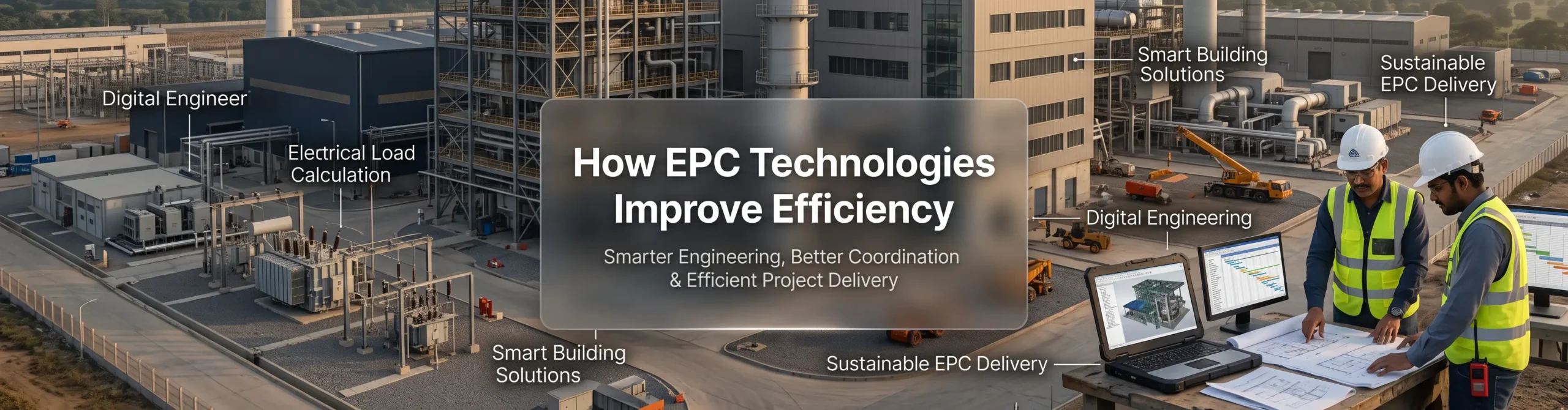
Effiencient planning, proper management of resources and timely completion of engineering and construction projects are key to successful operations. Whether it is industrial projects or commercial buildings, delays, overspending, energy losses and other problems may arise when executing such projects. This is where EPC technologies are changing how today’s projects are executed.
Engineering, Procurement and Construction (EPC) involve the integration of these three areas of projects in one project delivery system. Using technologies in digital engineering in construction, automation, data analytics and intelligent electrical systems in EPC contracting helps to increase efficiency.
At HLK Infra, the adoption of engineering technologies that are driven by technology in businesses that need to have efficient and modern infrastructure is of significance. With the advancement in this industry, the adoption of appropriate digital solutions will be helpful to have better control over quality, costs, timeline and energy usage.
What is EPC Contracting?
EPC contracting is a turnkey approach whereby the contractor is responsible for the design, supply of materials, and construction up until the completion and commissioning stages. The client works with only one party, thus ensuring that there are fewer coordination problems and easier planning of the schedule and cost.
Studies concerning EPC contracts and sustainable development projects indicate that such an integrated approach helps improve energy efficiency. Energy considerations are taken into account in the design stage.
Digital Engineering for Better Project Planning
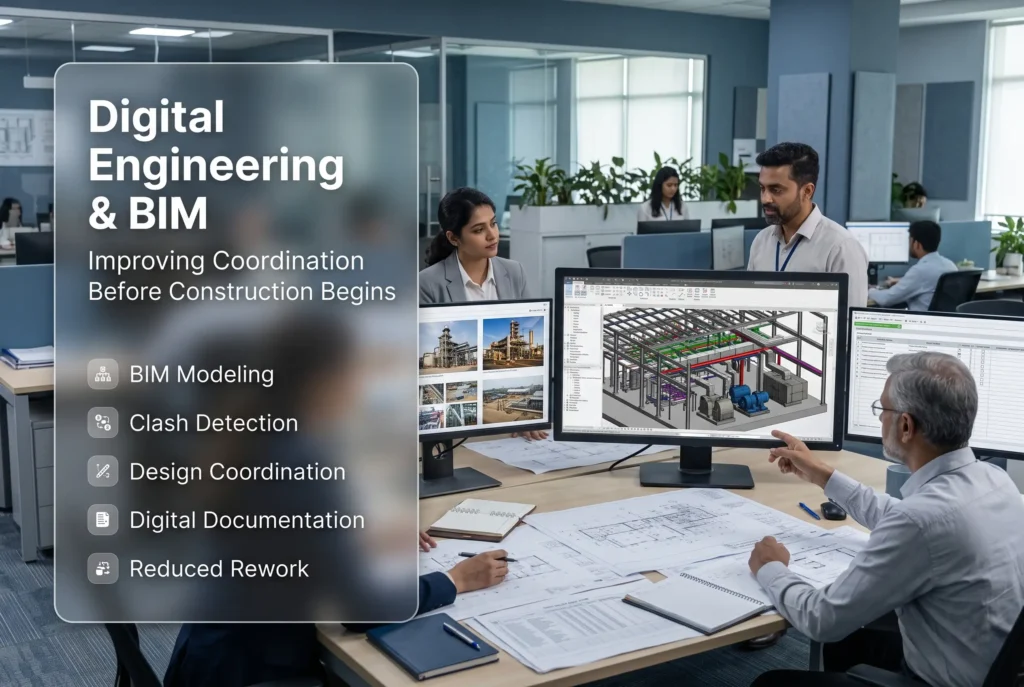
The use of digital engineering software like Computer-Aided Design (CAD) and Building Information Modelling (BIM) has enhanced the process of designing and coordinating construction projects.
BIM involves developing a virtual model of the construction that allows engineers to analyze the structure, mechanical and electrical components before the start of the construction process. It allows the detection of any possible design conflict, including overlaps of cable trays and ventilation ducts.
These types of problems can be sorted out before starting work, thereby avoiding rework and wastage of time and material resources. In addition, digital drawings allow better communication among the design team, contractors, and site engineers.
At HLK Infra, the coordination of engineering process is among the essential considerations when providing infrastructure support services.
Electrical Load Calculation for Safe and Reliable Systems
Electrical load calculation is an important aspect in electrical engineering and infrastructure planning. In general, it involves making estimates on the electrical load of equipment, lighting, heating, ventilation and air conditioning systems, machines and other connected loads.
Good load calculations aid engineers in determining proper cables, distribution panels, circuit breakers and other electrical devices to be used. These calculations enable the assessment of voltage drop, power factor, demand factors and future needs.
In case an industrial plant needs to add new machines, the engineers will need to make sure that the current electrical system is capable of accommodating the extra load. Such an analysis made during the planning phase makes it possible to know about the limitations of the electrical system.
Efficient electrical engineering principles may help HLK Infra have effective power distribution, safety systems and efficient facility operations.
Smart Building Solutions India: Improving Energy Efficiency
The increasing requirement for smart building solutions in India is due to the need for energy management, comfort and enhanced efficiency of facility operations.
The smart building technology utilizes connected sensors, automation technology and central monitoring system in order to regulate the lighting, heating, ventilation, air-conditioning and other building operations. In turn, these technologies help to control operations depending on occupancy, scheduling and environmental factors.
For example, the usage of occupancy sensors will minimize the consumption of electricity by unnecessary lighting of rooms which are not occupied at the moment. The HVAC controls will provide the ability to control the cooling process based on real needs. Furthermore, the building management system will provide the opportunity to monitor energy consumption.
HLK Infra incorporates these technologies during the EPC stage of projects implementation by emphasising efficient engineering practices and future-ready infrastructure planning.
Automation and Data Analytics in EPC Projects
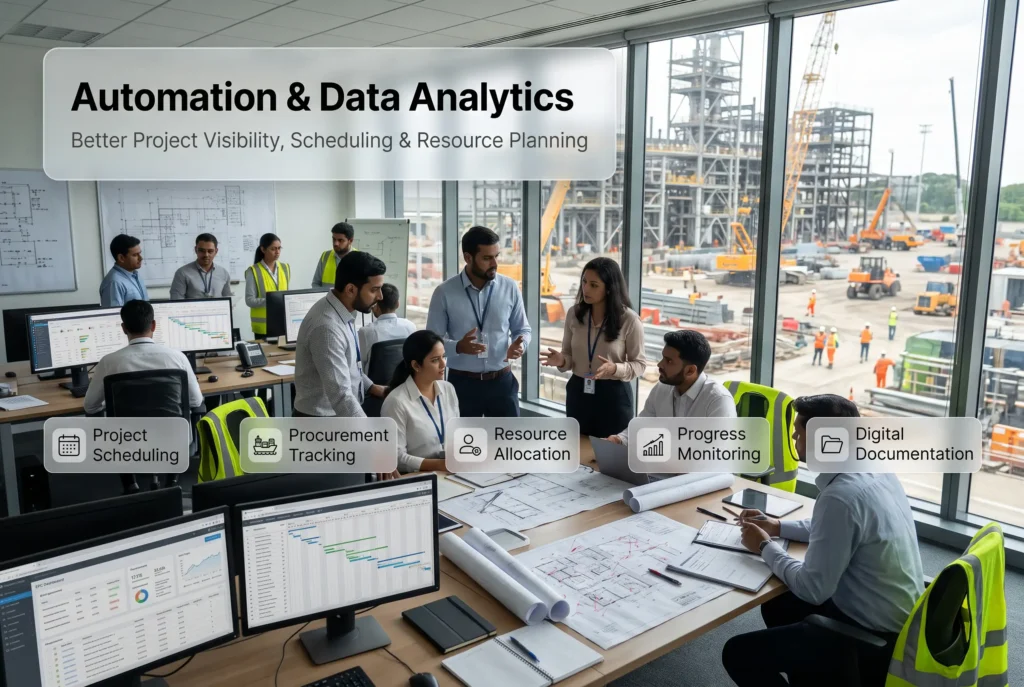
Project delays may be caused by problems related to communication, lack of materials and poor insight into the process on-site. These issues are being managed using modern technologies in EPC through project management software, automation tools, IoT sensors and data analytics.
The digital platform allows for putting together the schedule, engineering documents, procurement information and construction information. The project manager will be able to use this information in order to manage milestones and take action on potential risks.
Planning using data will also help with resource allocation and making decisions. Using digital documentation will enhance traceability and allow managing project documentation consistently during the project execution process.
Technology-based coordination is one of the key approaches for HLK Infra in terms of managing projects.
EPC Contracting for Sustainable Construction
Integration of engineering, procurement and construction in a project delivery framework forms what is called an EPC contract. In a case where proper technologies are available, the use of EPC projects can also be made to involve energy efficient equipment, renewable energy technology, better material management and waste reduction techniques.
Research done on the connection between EPC contracting and sustainable development shows that integrated planning and energy efficiency is critical in infrastructure projects. Nonetheless, the success of the findings depends on several factors including scope of the project, contract terms, design and implementation.
HLK Infra can assist in this regard by stressing the need for integration of good engineering with resource management and sustainable development practices.
EPC Companies in India 2026: Key Technology Trends
In 2026, Digitalisation, energy efficiency and intelligent infrastructure remain important considerations for EPC companies in India. As projects become more complex, adopting suitable technologies can help improve coordination and support long-term operational performance.
Important developments include:
- Building Information Modelling: Improves coordination between engineering disciplines.
- Artificial Intelligence and Analytics: Help identify risks and support project forecasting.
- Smart Electrical Systems: Enable better monitoring of power consumption and system performance.
- Digital Project Documentation: Supports information sharing, traceability and handover.
- Sustainable Engineering: Encourages energy-efficient infrastructure designs and appropriate renewable energy integration.
Successful implementation requires trained professionals, suitable digital infrastructure, secure data management and clearly defined project objectives. For HLK Infra, staying informed about these developments is valuable for understanding the evolving expectations of industrial and commercial infrastructure projects.
Final Thought
The role of EPC technologies is increasing in transforming the engineering and construction process through better coordination in design, efficient project management, and efficient resource utilization. The use of these technologies from proper electrical load calculations to automation and intelligent buildings in India could help to minimize errors and improve project performance.
HLK Infra requires awareness about modern EPC processes so as to develop infrastructure efficiently. Through combining technical knowledge with proper technology and EPC contracts, companies can develop facilities that suit their requirements.
Questions People Frequently Ask
EPC technologies are digital technology and engineering solutions that can be implemented within engineering, procurement, and construction to enhance coordination and efficiency.
They facilitate better communication, detect issues in design, automate processes and assist with management of project schedule, costs and resource utilization.
It helps engineers calculate electricity demand to provide proper equipment and ensure proper power distribution and usage.
They include automated lighting, HVAC control systems, various sensors and facility management software.
EPC contracting brings together engineering, procurement and construction in one delivery method.