

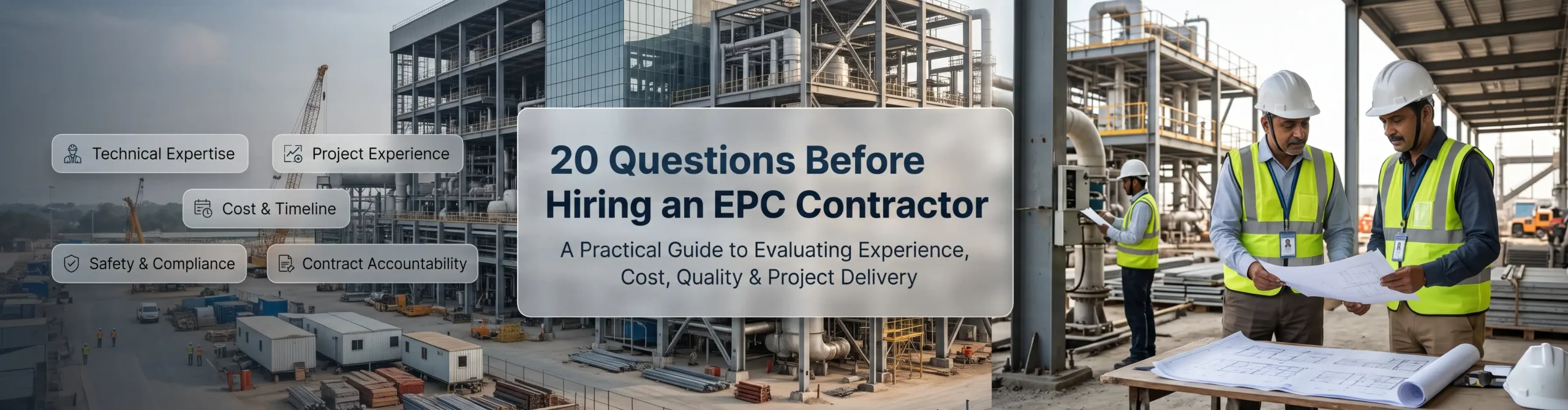
Choosing the appropriate contractor for infrastructure development is an essential step in the planning of an industrial, commercial or infrastructure project. A trustworthy contractor ensures the effective realization of the project, proper construction, monitoring of expenses and timely completion of the project. However, the existence of multiple EPC contractors in India makes the selection of the right contractor a challenging task.
Whether it is a construction of an industrial facility, a commercial building or water management system, it is recommended to raise the right queries before the contract is signed so as to avoid delays, costs overruns and construction problems.
HLK Infra, rooted in the legacy of excellence in the industrial sector, we realize the significance of procurement, engineering and construction services.
What is an EPC Contractor?
An EPC contractor refers to an organisation in charge of Engineering, Procurement and Construction based on a unified contract. This contractor is responsible for everything that goes on during the project lifecycle ranging from design to acquiring the necessary materials to construction and till the final handover.
An experienced EPC contractor in India combines all three stages mentioned earlier to create a completed project. This is very useful for many industrial plants and infrastructures since such projects often require special Engineering and construction services.
Click on This – Get More Information
Why is Choosing the Right EPC Contractor Important?
Choosing the appropriate EPC company has a direct impact on the quality, safety, cost and schedule of the project. An experienced industrial EPC contractor in India is capable of eliminating coordination problems, managing suppliers, ensuring compliance with regulations and being careful about the standards of construction.
At HLK Infra, we offer Turnkey engineering and construction solutions that combine different project activities through integrated execution and strategic EPC project management. A good choice of the partner guarantees successful operation of a company with regard to the improvement of cost transparency and efficiency of the processes, as well as the long-term value of infrastructure projects.
25 Questions to Ask an EPC Contractor in India Before Starting Your Project
| No. | Question to Ask | Answer | Why Should You Ask? | Benefits |
|---|---|---|---|---|
| 1 | How many years of EPC experience do you have? | A reliable contractor states its years in business and the number and type of EPC projects completed in that time. | Evaluates industry experience and project expertise. | Lower risk of working with an inexperienced contractor. |
| 2 | Have you completed projects similar to ours? | Yes, with examples matching your sector, scale and complexity (for example, industrial, commercial or infrastructure). | Confirms relevant sector-specific knowledge. | Fewer learning-curve mistakes and faster execution. |
| 3 | Can you share previous project references and case studies? | Yes, with client references, project details, completion records and photos or documents you can verify. | Helps verify actual project performance. | Builds trust and lets you check claims before signing. |
| 4 | Do you have an in-house engineering team? | Yes, with qualified design, civil, mechanical and electrical engineers, and a named lead for your project. | Ensures technical coordination and design support. | Better design-to-construction coordination and faster problem-solving. |
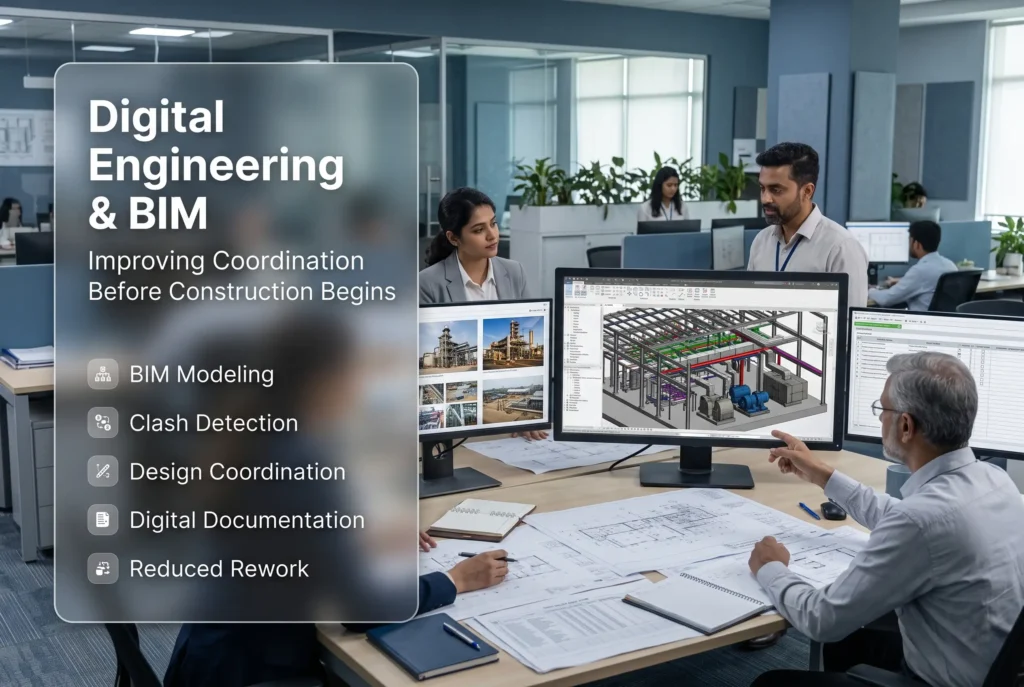
| 5 | What engineering technologies and design tools do you use? | Names the actual tools, such as BIM/Revit, AutoCAD, structural analysis software and project-planning software. | Evaluates technical capabilities and design accuracy. | More accurate designs, fewer clashes and less rework. |
| 6 | Can you customise solutions according to project requirements? | Yes, with an explanation of how the design is adapted to your site, budget and operational needs. | Confirms flexibility for specialised infrastructure needs. | A solution that fits your project instead of a standard template. |
| 7 | How do you select and evaluate material suppliers? | A defined vendor-approval process: pre-qualification, quotations, past performance, certifications and site audits. | Helps assess supplier reliability. | Dependable supply and fewer delivery or quality issues. |
| 8 | What quality standards do your construction materials meet? | Names the applicable standards (for example ISO, BIS, ASTM or local codes) and provides test certificates. | Ensures material durability and compliance. | Longer asset life and compliance with specifications. |
| 9 | Do you conduct material inspections and testing? | Yes, with inspection at receipt, third-party or lab testing where required, and written test reports. | Reduces the risk of defective materials. | Fewer defects and lower repair or replacement costs. |
| 10 | Will you provide a detailed project cost breakdown? | Yes, an itemised estimate covering engineering, procurement, construction, labour, equipment and contingency. | Improves budget transparency. | Clear budget visibility and easier comparison of quotations. |
| 11 | How do you manage unexpected expenses and cost variations? | A contingency allowance, a formal change-order process and written client approval before any extra cost. | Helps prevent financial surprises. | Cost control and no unapproved charges. |
| 12 | Are there any additional charges outside the initial quotation? | A clear list of inclusions and exclusions, and which items could cost extra (for example, scope changes or site conditions). | Identifies potential hidden costs. | No hidden costs and a more accurate final budget. |
| 13 | What is the estimated project completion timeline? | A phase-wise schedule covering design, procurement, construction, testing and handover, with milestone dates. | Establishes realistic delivery expectations. | Realistic planning and a predictable handover date. |
| 14 | How do you monitor project progress and milestones? | Regular progress reports, site meetings, a project schedule and a named project manager as the single point of contact. | Ensures accountability throughout execution. | Full visibility and early detection of slippage. |
| 15 | What happens if the project faces unexpected delays? | A delay-management plan, a recovery schedule, and contract clauses on responsibility and any penalties or extensions. | Clarifies delay management and responsibilities. | Clear responsibility, faster recovery and less disruption to your business. |
| 16 | What workplace health and safety policies do you follow? | A written HSE policy, safety training, PPE use, a site safety officer, incident reporting and an audit record. | Protects workers and project stakeholders. | Safer sites, fewer accidents and lower liability. |
| 17 | Do you comply with applicable building codes and regulations? | Yes, with the specific codes and local authority regulations that apply to your project listed. | Reduces legal and regulatory risks. | Avoids fines, stop-work orders and costly redesign. |
| 18 | What permits and approvals will you manage? | A list of the permits, authority approvals and NOCs the contractor handles and those the client must handle. | Clarifies responsibility for statutory compliance. | Smoother approvals and no delays from missing permits. |
| 19 | What quality assurance procedures do you follow? | A documented QA/QC plan with inspection checklists, hold points, non-conformance reports and sign-offs. | Maintains consistent construction quality. | Consistent workmanship and fewer defects at handover. |
| 20 | How do you identify and manage project risks? | A risk register with owners and mitigation actions, reviewed regularly through the project. | Helps minimise operational and execution challenges. | Fewer surprises, and problems handled before they grow. |
| 21 | Do you conduct regular site inspections and quality audits? | Yes, with a stated inspection frequency, written audit reports and corrective actions tracked to closure. | Ensures work meets approved specifications. | Work stays to specification, and issues are caught early. |
| 22 | What are the payment terms and project deliverables? | A milestone-based payment schedule tied to defined deliverables, with advance, progress and final payment terms in writing. | Prevents contractual misunderstandings. | Aligned expectations and payment linked to actual progress. |
| 23 | What warranties and defect-liability provisions do you offer? | A stated warranty period, a defect-liability period, and a clear process and response time for rectification. | Clarifies post-completion protection. | Protection after handover and free rectification of covered defects. |
| 24 | Do you provide maintenance and after-project support? | Yes, with details of operation and maintenance support, spares, training and any annual maintenance contract options. | Ensures long-term operational reliability. | Better asset performance and a long-term support partner. |
| 25 | What are the termination and dispute resolution clauses? | A contract with clear termination conditions, notice periods and a defined dispute process (negotiation, mediation, arbitration). | Protects both parties in unforeseen circumstances. | Legal clarity and an orderly way to resolve conflicts. |
Documents to Check Before Signing an EPC Contract
Before hiring an EPC contractor, it is necessary to verify the important documents to make a confirmation of credibility and clarity of contracts before signing.
Important documents are:
- Company registration and all applicable business licences.
- GST registration and PAN information.
- Relevant technical certifications along with quality related credentials.
- Certificates of completion of previous projects along with references received from clients.
- Technical proposal with designs made.
- Detailed list of works with cost estimates.
- Schedule made with milestones.
- Specifications of materials and plans for quality assurance.
- Safety measures and compliance certificates.
- Insurance and warranty documentation.
A thorough document review enables companies to evaluate a contractor in India properly and make a decision for starting a contract.
Common Mistakes to Avoid When Choosing an EPC Contractor
Choosing an EPC contractor based only on the lowest pricing option may lead to poor quality and unexpected costs. Avoid these usual pitfalls:
- Not Considering Previous Experience – Look at the relevant experience more than marketing brochures.
- Ignoring Technical Abilities – Make sure that the contractor has the necessary technical skills for your project.
- Skipping Contract Terms Analysis – Define the responsibilities, price, dates and penalties properly.
- Neglecting Safety Compliance – Check that safety requirements are met.
- Overlooking Maintenance Services – Keep in mind that long-run operations imply the need for support.
- Ignoring Information Flow – Choose a contractor with transparent reporting and efficient EPC management techniques.
Conclusion
Choosing the appropriate EPC contractor is instrumental in achieving quality in the work done, cost-effectiveness, and timely completion of a project. Asking these questions allows you to understand the competency and know about the expenses involved in the project.
HLK Infra is a leading player when it comes to collaborations in the engineering, procurement and construction of various types of infrastructure projects, such as industrial, commercial, electrical, mechanical and water infrastructure projects.
Get in touch with HLK Infra to know more about the customized turnkey EPC solutions they offer for your project.
Questions People Frequently Ask
It is essential to take into account the contractor’s experience in the industry, technical competency, past completed projects, transparency in finances, adherence to safety standards, possession of a quality certification and a good ability to meet deadlines.
An EPC contractor combines engineering, procurement and construction in a single contract, while a traditional contractor performs only construction work or manages construction separately from engineering and procurement.
EPC contractors apply integrated project planning, procurement management, resource management and expense control, thereby minimizing the chance of missed requirements, reducing waste and solving unexpected expenses.
An EPC contract has to cover the project description, technical requirements, responsibilities of the parties, project budget, payment conditions, completion deadline, quality requirements, safety rules and dispute resolution measures.
An experienced EPC contractor will have the resources and skills needed to manage the various aspects of the industrial construction project. At HLK Infra, an industrial construction company in India, we ensure all the necessary assistance at each stage of the execution of your project.