

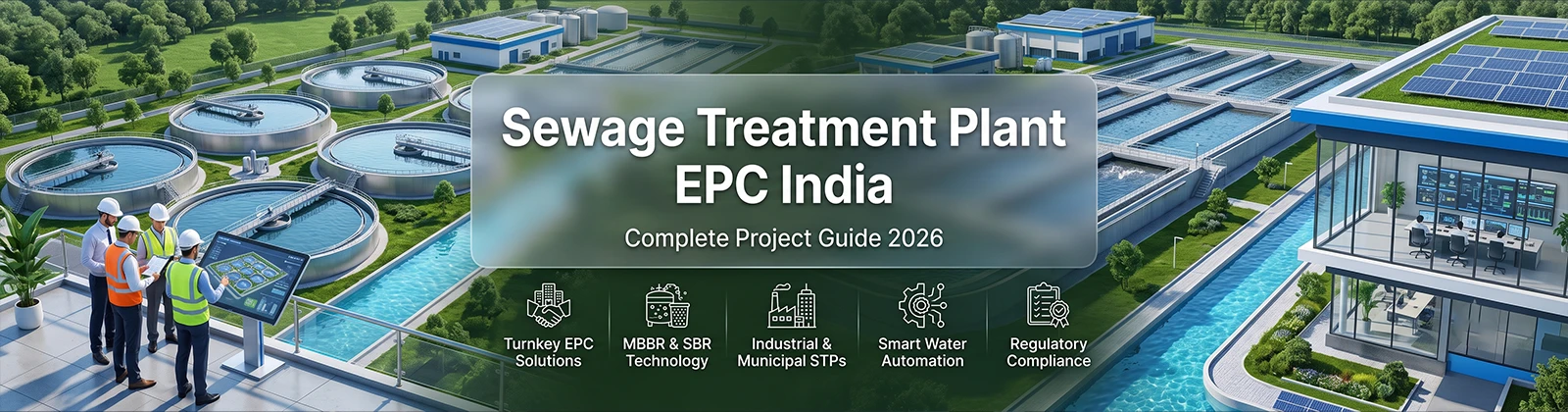
A Guide to Sewage Treatment Plant EPC India 2026
As India moves through 2026, rapid urbanization and strict environmental regulations are being implemented; managing water sustainably is now an essential requirement. This detailed manual provides insight into the evolving nature of sewage treatment plant engineering procurement construction (EPC) in India, including state-of-the-art treatment technologies, cost models, compliance standards, and execution plans. Leading EPC partners, such as HLK Infra, are leading the innovation of wastewater treatment infrastructure throughout Indian municipalities, industrial parks, and urban local bodies.
Wastewater Treatment EPC Landscape in India 2026
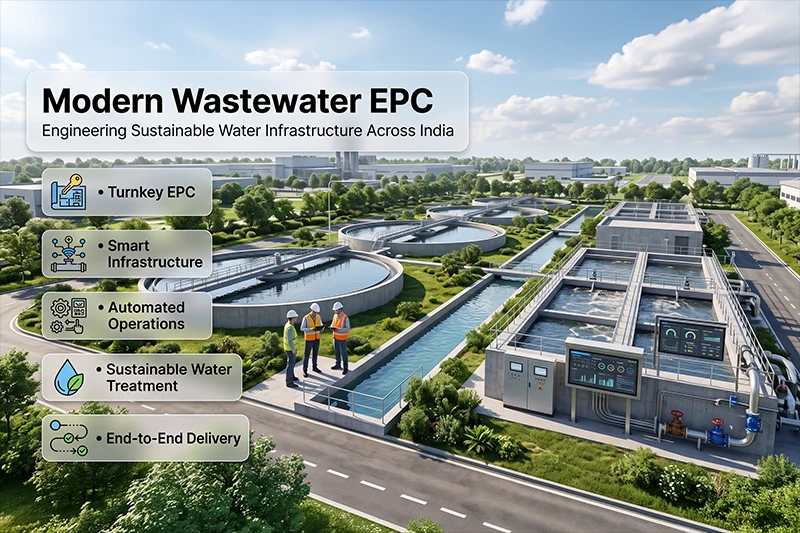
Wastewater treatment once meant having a sewage treatment plant (STP) created to the side of the property; it was only created after the building of a structure was finished. Now, STPs are required to be state-of-the-art, intelligent, automated, and efficient.
Selecting an STP contractor in India as the first and most important step is essential to the EPC process. A capable EPC contractor should not only provide materials and install the STP; they will also provide the entire life-cycle of the project (feasibility study, engineering design, procurement, construction, commissioning, and long-term operations and maintenance). HLK Infra continues to be a leader in this evolving space by providing customers with complete turn-key EPC projects that incorporate cutting-edge technology and cost-effective engineering.
Key Technologies Deciphering Sewage Treatment Plant Design India
One of the top key technologies for deciphering the sewage treatment plant design in India in 2026 is not a “one size fits all” proposition. Depending upon your space limitations, discharge requirements, and budget, your EPC partner will recommend one specific core technology related to sewage treatment plant design in India based on the service you require. Currently, (2026), two key technologies dominate the Indian market for sewage treatment plant design:
- Moving Bed Biofilm Reactor or STP MBBR technology in India – MBBR works great when there are space limitations (common in commercial realty and the urban residential township zone). STP MBBR uses thousands of specially designed polyethylene biofilm carriers that operate in mixed motion inside an aerated wastewater treatment basin. The result is a higher concentration of biomass. Thus, less overall space is needed due to improved treatment efficiency.
- Sequential Batch Reactor (SBR) – The second core technology that dominates the Indian sewage treatment plant design market is the SBR. It is typically used at larger operations (especially municipal) and consists of a fill and draw activated sludge treatment system, whereby all operations are performed in the same tank. With SBR, you do not need a separate clarifying vessel for your sludge; you can easily and effectively remove nutrients (nitrogen and phosphorus), and because of this, you can manage hydraulic loading more effectively and efficiently as well.
HLK Infra is an expert on customizing both MBBR and SBR designs, so the technology used for either of these processes will be matched to the specific volumetric loadings and treatments as necessary as part of the overall process.
Industrial vs Municipal Sewage Treatment Plant
The differences between Municipal Infrastructure and Industrial Estates concern how wastewater is treated, how much it costs to treat wastewater and how much effort goes into treating and disposing of wastewater before it enters the natural environment.
Municipal Sewage Treatment in Municipalities vs. Sewage Treatment Plants in Industrial Estates are treated very differently because the design requirements for an industrial estate plant require a much more sophisticated understanding of the effluent and sewage produced by that industry.
Because of the complexity and variety of wastewater produced from an industrial estate versus a municipality, the system must be able to provide treatment in accordance with the local governing agency’s SPCB laws and regulations.
Through the development of industrial estate STPs, the HLK Infra team designs and builds robust and versatile STPs that are engineered specifically for the treatment of a variety of industrial effluents and sewage from local industries. HLK’s experienced engineers have the knowledge and skills to work with local authorities to meet and exceed national average daily sewage treatment capacities of municipalities by using their advanced automated monitoring systems, efficient, low-power-consuming equipment, and high-quality bi-nate effluent separation technologies.
For municipal sewage treatment planning and implementation, municipalities and their local authorities may face challenges related to capacity, cost, and demand for municipal STPs, such as meeting current municipal sewerage generation rates and providing wastewater treatment services for future populations of municipalities, especially as they approach near-total urbanization.
The HLK Infra team partners with municipalities, their local authorities, and their planning and development agencies to deliver scalable municipal STPs that employ automated monitoring systems and incorporate environmental technology to promote and protect public health safety
Evaluating the Cost of Sewage Treatment Plant in India 2026
The actual cost of the sewage treatment plant in 2026 depends on the capital expense (CAPEX) and operating expense (OPEX), which can vary significantly due to several factors, so there is no set price.
For example, a 50,000-litre-a-day (KLD) packaged plant will be less expensive to purchase than a 10,000,000-litre-a-day (MLD) municipal plant, but in terms of cost per litre of water produced, it will be more expensive to run. If a designer attempts to design the plant below the peak load (e.g., if they design to accommodate 80 KLD of loading in a 50 KLD packaged plant), the result will be that the system will fail biologically and/or produce odours.
Some other factors, that will use a Moving Bed Biofilm Reactor (MBBR) to reduce media costs over the life of the project, but it will require more land to construct the plant; whereas, if the plant requires an SBR and has advanced automation to meet the required level of automation, it may require additional support systems such as mechanical equipment.
Generally, the overall costs over the life of the project will be less if you are working with an experienced company such as HLK Infra; we have developed strong procurement networks and incorporate value engineering in the design to minimize the amount of energy, chemicals, and waste generated during operations.
Compliance and Maintenance of the Sewage Treatment Plant India
Building an STP is only part of the equation; compliance will be more than half your challenge as an STP owner/operator. Statutory compliance in India is onerous, with MoHUA, CPCB, and SPCB all asserting specific effluent quality Standards (i.e., BOD <10 mg/l, TSS <20 mg/l, and COD <50 mg/l). Failure to meet these discharge metric compliance thresholds can result in significant fines, legal action, or closure of the STP (in the case of commercial property owners).
Secondly, an STP is an ever-changing biological ecosystem. Without qualified O&M professionals conducting regular Operation and Maintenance (O&M) activities and maintaining comprehensive documentation, including daily logs, energy consumption records, and laboratory testing results, the STP will most likely fail an audit and its operations may be irreparably harmed. By engaging HLK Infra, you can leverage their 100% O&M Service capabilities, including certified field technicians and IoT monitoring tools that can be utilized to provide you with maximum comfort and assurance of the long-term operational responsiveness of your STP.
Conclusion
The commissioning of a sewage treatment plant (STP) is a significant recognition of any project’s infrastructure investment performance. By selecting a complete sewage treatment plant EPC India partner like HLK Infra, you are purchasing more than equipment; you are also investing in engineering excellence, regulatory compliance, and a sustainable future.
Are you prepared to begin your transition to a wastewater management solution? Contact the experts at HLK Infra today for a more tailored feasibility analysis.
Questions People Frequently Ask
Yes, STP installation is largely mandated by the local authorities, and SPCB depends on the Local Building Regulations, the size of the project, the occupancy, and the condition of the environmental approval.
Site assessment, engineering design, sourcing all mechanical/civil materials and hardware for construction, running the site construction, and placing the STP into operation.
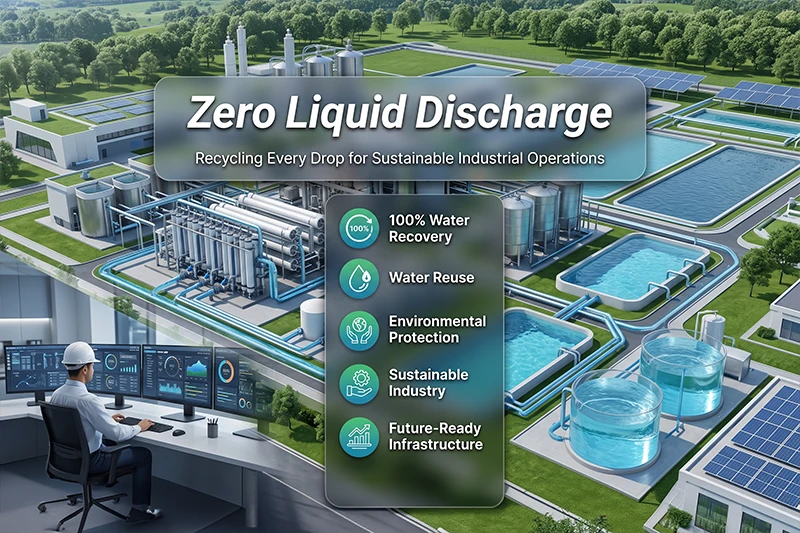
100% of the industrial waste will be treated and recycled back to the facility, without penalties for discharges to the environment; meeting stringent SPCB Regulations, and you will have a reliable, independent source of recycled water.
MBBR is a continuous flow process with specialised plastic media carriers for biomass growth, while SBR operates as a batch process within a single tank. Both technologies are highly effective biological wastewater treatment technologies.