

Water management in India is more of a responsibility than a resource management. With the increasing urban population, climate uncertainty, and aging infrastructure, the country is facing a critical turning point. The historical methods of water management, which depended on reactive measures, required manual work and used separate systems. This has become insufficient for the current needs. Therefore, the country needs to reinforce new strategies for managing water.
In 2026, the country introduces a new guiding principle, which states that organizations should manage their operations through measurement systems. The new approach shows different industries, urban areas, and governmental bodies how to implement Smart Water Management Solutions in India.
Table of Contents
- The Shift from Traditional to Smart Water Systems
- What Measurement is the Backbone of Smart Water Management
- The Role of Smart Cities in Driving Change
- Industrial Transformation: From Waste to Resource
- Strengthening Water Supply Infrastructure
- The 2026 Agenda: Data, Sustainability, and Accountability
- Final Thoughts
- Questions People Frequently Ask
The Shift from Traditional to Smart Water Systems
Traditional water management systems continue to face operational problems because they do not work efficiently. The combination of manual monitoring with slow reporting methods and missing transparency results in three negative outcomes, which include water loss and contamination dangers, and increased operational expenses.
The current transformation uses water management technologies that function through IoT, AI, and real-time analytics. The system establishes continuous water flow, quality, and consumption monitoring to provide accurate data for future decisions.
According to recent industry insights, smart water systems are enabling utilities to monitor flow, pressure, and quality in real time, which leads to better operational performance and decreased system failures.
The measurement-driven strategies require assessment because they serve as essential elements of this process. Accurate data becomes necessary because advanced infrastructure systems depend on it to maintain their operational performance.
What Measurement is the Backbone of Smart Water Management
The essential component of smart water resource administration depends on measurements which function as its fundamental support structure.
City officials in India face challenges because they lack knowledge about water leakage locations and actual water usage throughout the city. The current water management systems operate through a combination of sensor technology and analytic systems, which deliver the following capabilities to users:
- Real-time leak detection
- Consumption tracking
- Predictive maintenance
- Demand forecasting
IoT-enabled systems collect data continuously, which enables operators to identify operational problems through real-time monitoring so they can address issues before they become major operational failures.
This level of transformation in Water infrastructure management that operates with proactive management to enhance visibility enables operators to monitor their complete system performance.
The Role of Smart Cities in Driving Change
India’s smart city initiatives are playing a major role in accelerating water management in smart cities. Cities now achieve greater operational efficiency through their adoption of automated distribution networks and smart metering systems.
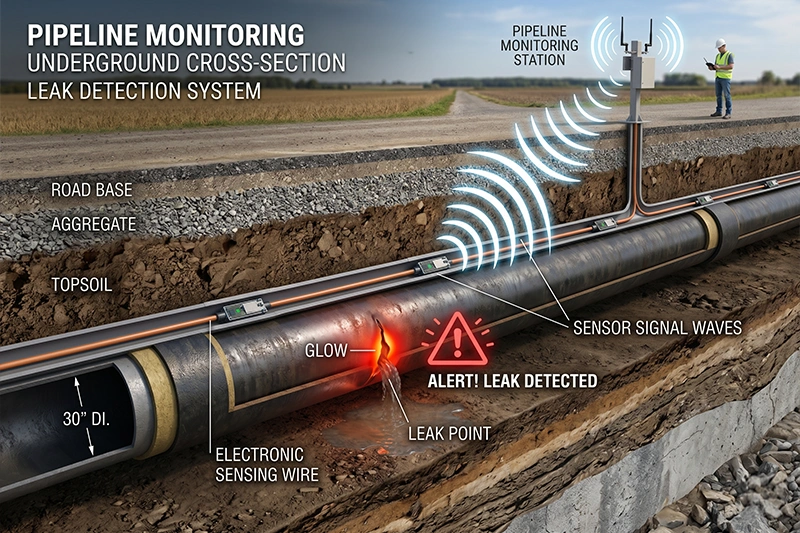
Most cities use pipeline monitoring systems to monitor water flow and identify leaks through real-time detection. The system decreases water waste while maintaining continuous water delivery.
Smart cities combine their water supply infrastructure with centralized dashboards, which help authorities optimize resource management through better visibility of their operations.
The result delivers improved service delivery together with decreased operational losses and enhanced environmental sustainability.
Industrial Transformation: From Waste to Resource
Industrial facilities in India use more water than any other sector, yet it is also transitioning from traditional manual systems toward smarter and more sustainable solutions.
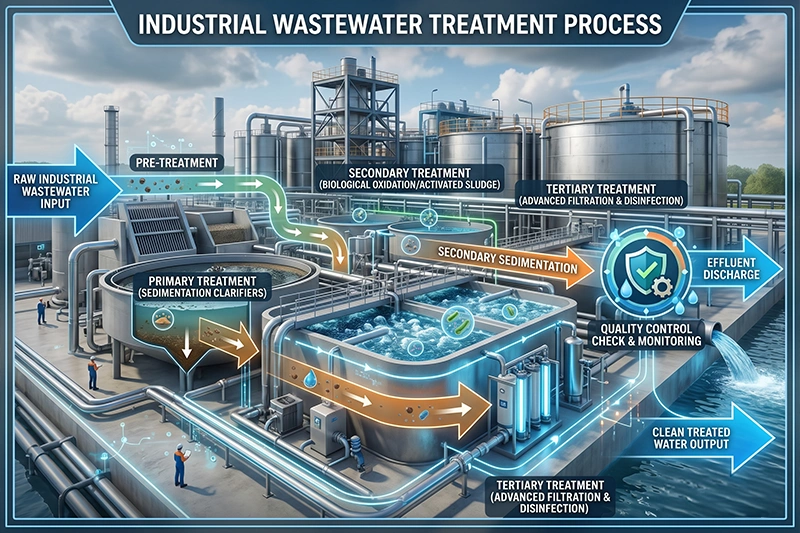
A modern Industrial Wastewater Treatment Company no longer relies on manual testing. IoT sensors now track pH, turbidity, and chemical levels in real time to verify compliance and operational efficiency.
Traditional systems required users to manually control operations because they did not provide ongoing visibility of system status. However, smart technologies eliminate these issues by providing continuous data and automated controls.
The present transformation creates a need for EPC companies to provide complete sewage treatment services, which include design and execution, together with smart water monitoring systems.
Strengthening Water Supply Infrastructure
The increasing population of India requires water supply systems that provide dependable service. Infrastructure development requires intelligent systems because construction work remains insufficient.
Water management systems receive operational improvements through smart technologies, which:
- Optimizing distribution networks
- Reducing non-revenue water (losses)
- Improving asset lifecycle management
- Enabling predictive maintenance
Utilities use AI and analytics to predict demand and manage resources, which enables them to supply enough water without any waste.
This situation develops into an urgent problem that affects cities because water shortages continue to increase.
The 2026 Agenda: Data, Sustainability, and Accountability
Data-driven water management will establish the future of water management according to current research findings.
In 2026, we can expect:
- Wider adoption of IoT-enabled water systems
- Increased use of AI for predictive analytics
- Expansion of decentralized water solutions
- Stronger regulatory frameworks for transparency
The Indian water sector is advancing toward a system that will track and evaluate every drop of water through optimization processes
The change focuses on both technological advancement and organizational responsibility. The ability to measure systems enables organizations to control these systems. Sustainable operations become possible when organizations achieve full system control.
Final Thoughts
The implementation of smart water management systems has become a mandatory treatment for contemporary water management needs. The ongoing development of India requires the creation of water infrastructure systems that operate with efficient performance while maintaining complete visibility and environmental stability.
The transformation process requires measurement-driven strategies, which serve as its foundational element. The implementation of these systems results in improved decision-making processes while decreasing waste and promoting sustainable water resource management.
India is progressing towards an advanced water management system, which uses intelligent management methods through its smart city programs, industrial research initiatives and business operations at HLK Infra.
Read More – Benefits of Retrofitting Services for Water Treatment Systems
Questions People Frequently Ask
Smart water management uses modern technologies, which include IoT, AI, and data analytics to track, manage, and enhance water consumption and distribution operations through real-time monitoring.
It is important to measure the water specifically, to know how fresh the water is and what the composition of the water is.
Smart water management solutions in India refer to technological systems that use sensors, analytics platforms, and automation tools to achieve better water efficiency and sustainability outcomes.
Smart cities use technologies such as pipeline monitoring systems and smart meters together with centralized dashboards to achieve effective water distribution management.
The company develops complete solutions that include water treatment plant services in India, including operations and sewage treatment EPC services, and advanced water management systems to build sustainable infrastructure.