

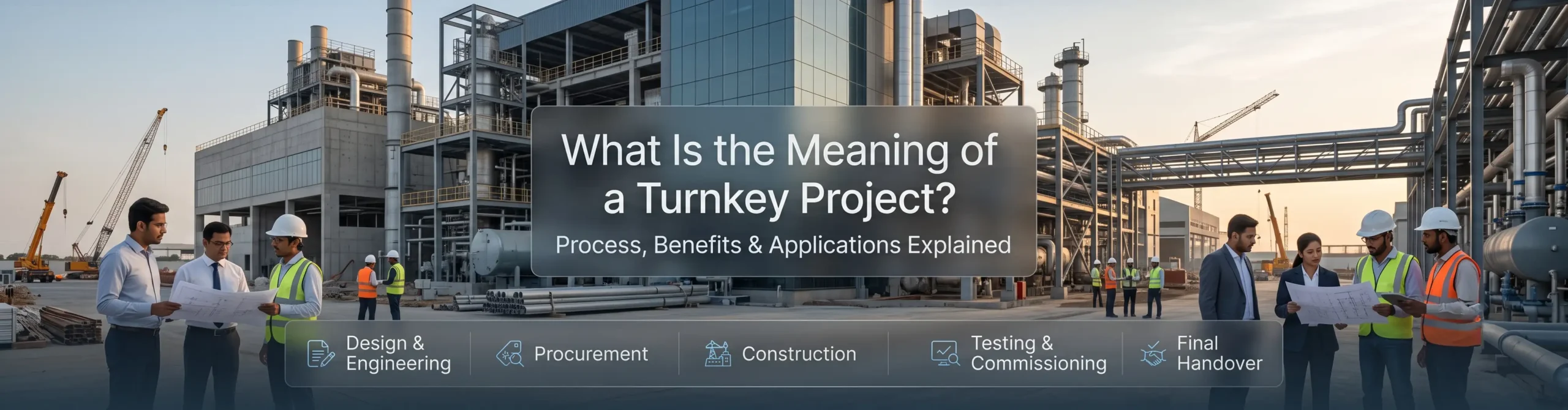
Management of construction projects may involve coordinating between various stakeholders such as designers, engineers, contractors, suppliers, equipment manufacturers and different construction crews. A turnkey project streamlines the process by assigning primary responsibility of all aspects of the project to one main contractor, covering the entire project phase from conception to completion.
What is Turnkey Project?
A turnkey project is an all-inclusive method of delivering a project from start to finish where one company takes full responsibility for the project from planning, design, procurement,
construction, installation, testing and final project handover to the client. The client receives a finished facility ready for use without managing multiple companies.
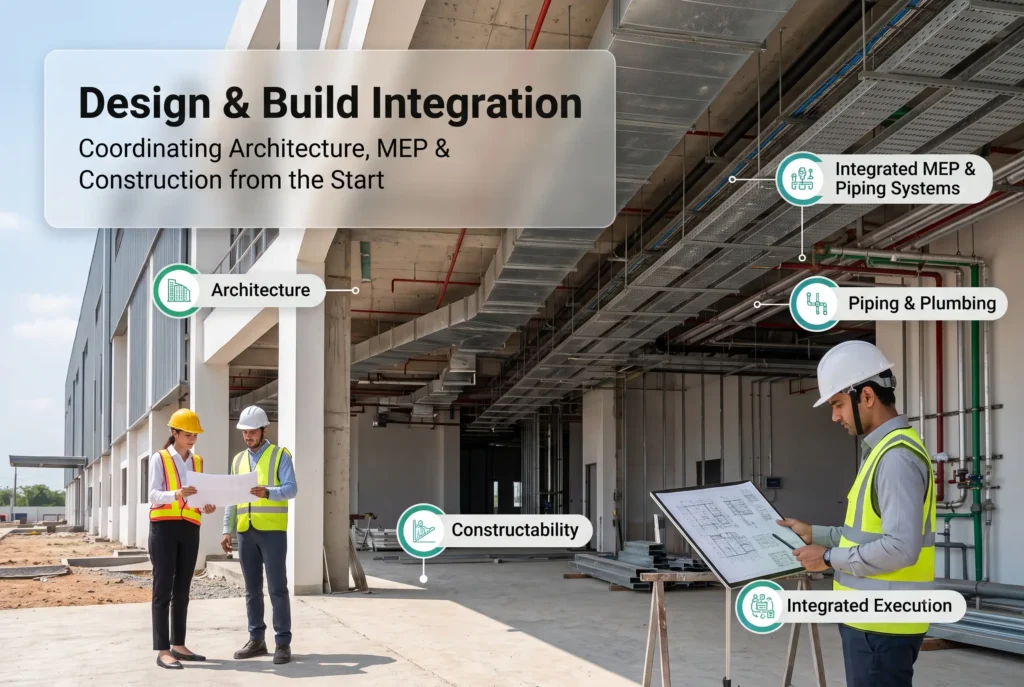
Turnkey projects are generally delivered using the Design & Build methodology, which facilitates coordination and communication between design and construction teams. Turnkey services consist of piping and plumbing, water management, MEP services, civil works and commissioning, depending on the project requirements.
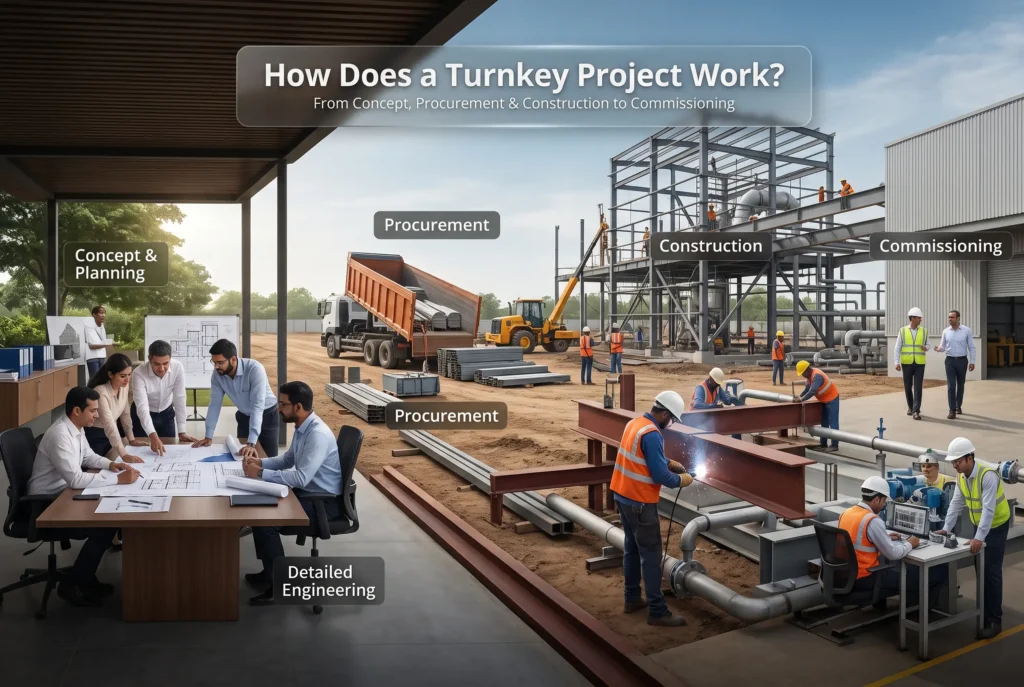
How Does a Turnkey Project Work?
A normal turnkey project involves the following procedure:
- Requirement Assessment and Planning – The first step entails an assessment of the
client’s operational needs, site situation, objectives, budget, standards and expected
project completion period. The project scope is determined at this stage, once it is
finalised and well defined, planning can begin.
- Design and Engineering – The design stage entails turning the client’s needs into
architectural, structural, MEP, utility, and engineering solutions. In the design and build model, the design and construction phases happen at once, facilitating coordination between planning and execution stages.
- Procurement – Materials, equipment and other systems are identified and sourced based on project specifications. Synchronizing procurement activities with engineering and construction planning help facilitate the continuity of the project.
- Construction and Installation – The construction process involves management of
construction activities on the site, including the civil works, structural works, building
services, equipment installation and other related infrastructures. Depending on the type of project, this might as well include electrical systems, HVAC, firefighting, installation of the piping and plumbing system among others.
- Testing and Commissioning – Systems put into place will be inspected and tested to ensure that they meet the requirements set out by the approval process. Commissioning becomes especially crucial for industrial and infrastructure projects.
- Handover – Once the facility has been completed, tested, documented, and approved, it is then transferred to the client for use.
Key Benefits of Turnkey Construction Project
- Single Point Responsibility – The most important benefit of Turnkey construction is the one contractor who is in charge of handling and operating every aspect of the construction. It allows communication to be simpler and easier, thereby helping clients avoid dealing with different contractors.
- Better Design and Construction Coordination – This form of construction unites both design and construction processes that are planned together. As a result, one can analyze design decisions and the construction requirements, which leads to fewer gaps in coordination.
- Improved Project Scheduling – Another advantage of Turnkey construction is that design, procurement and construction are planned and managed in one go. This contributes to effective coordination of work and minimizing unneeded delays.
- Greater Cost Visibility – An elaborated framework of the project, procurement strategy, and implementation plan may allow clients to clearly understand costs of the project. It is important to note that while turnkey delivery helps with project budgeting, the cost related to a project always depends on its size, requirements, materials to use, and site conditions.
- Reduced Coordination Risk – Turnkey construction provides a unified organization that facilitates coordination of civil, structural, MEP, utilities and specialized systems. This minimizes the communication gaps in various fields, thus optimizing the implementation process of the project.
Application of Turnkey Projects
The concept of turnkey is usually used across different fields where different disciplines should interact with one another. Some of the significant uses of the method include:
- Manufacturing and industrial plants
- Commercial and office buildings
- Logistics and warehouse buildings
- Institutional buildings
- Infrastructure projects
- Plants for water and wastewater treatment
- Utility and treatment plants
- Oil and gas facilities
- Plants Industrial and Mixed Residential Development
As for industrial turnkey projects, it may include construction, structure, electrical systems, mechanical installation, utilities, fire safety, etc. HLK Infra delivers various turnkey services, including design, engineering, procurement, construction, management and handover.
Why Choose HLK Infra for Turnkey Construction?
HLK Infra provides comprehensive Design-to-Build services. The company combines design, engineering, acquisition, building and project oversight in one cohesive project delivery framework.
With its turnkey solutions, HLK Infra provides end-to-end project support, from initial consultation and site assessment through concept development, detailed engineering, procurement, construction, quality assurance, testing, and commissioning.
For clients undertaking complex industrial, commercial, institutional, and infrastructure projects, turnkey delivery simplifies project management by improving coordination between the various teams involved in the design and construction phases. This integrated approach helps streamline communication, maintain project consistency, and support efficient project execution.
Conclusion
A turnkey project is a project delivery approach that integrates design, engineering, procurement, construction management, and execution under a unified framework. This approach helps streamline project delivery by improving coordination and providing greater control over cost, schedule, and quality. Design-to-Build service companies in India typically provide a single point of contact to manage and oversee the project from conception through completion.
HLK Infra is a Design-to-Build service provider in India offering integrated solutions for complex projects, supported by expertise in engineering, utilities, plumbing and piping systems, and construction. By choosing a reliable turnkey contractor, businesses can benefit from better project coordination, streamlined execution, and efficient project management from start to finish.
Questions People Frequently Ask
A turnkey project is a project delivery model wherein one contractor supervises the project from the design phase up to the handover process. Thus, clients are able to get one contact point for the entire project.
Turnkey construction can be inclusive of the design, engineering, procurement, construction, project management, quality control, testing, commissioning and transitioning of the project to the customer. The exact extent depends on the requirements of the project.
The design and build strategy in construction refers to combining construction and design in one contract. In contrast, the term “turnkey construction” implies a broader definition that involves various stages of project delivery, including commissioning and procurement. The advantages for the client derived from both methods include a single contractor dealing with the project instead of several companies.
Turnkey construction lessens coordination risk by putting different activities of the project under one administrative organization. Having defined responsibilities, integrated planning, and centralized communication can significantly lower delays, conflicts during design and problems during implementation.
Yes, HLK Infra specializes in providing integrated turnkey and design-to-build services in India, focusing on challenging construction and infrastructure projects. HLK Infra has the capacity to deal with any tasks regarding design, engineering, sourcing, construction, utilities, plumbing, water management, commissioning and transferring a project.